← Back to Care Guides
Learn how to care for one of the most popular species of tortoise in the world. Care videos from my YouTube channel will be linked throughout this care guide for those that prefer to learn from videos. I also have sulcata tortoises for sale
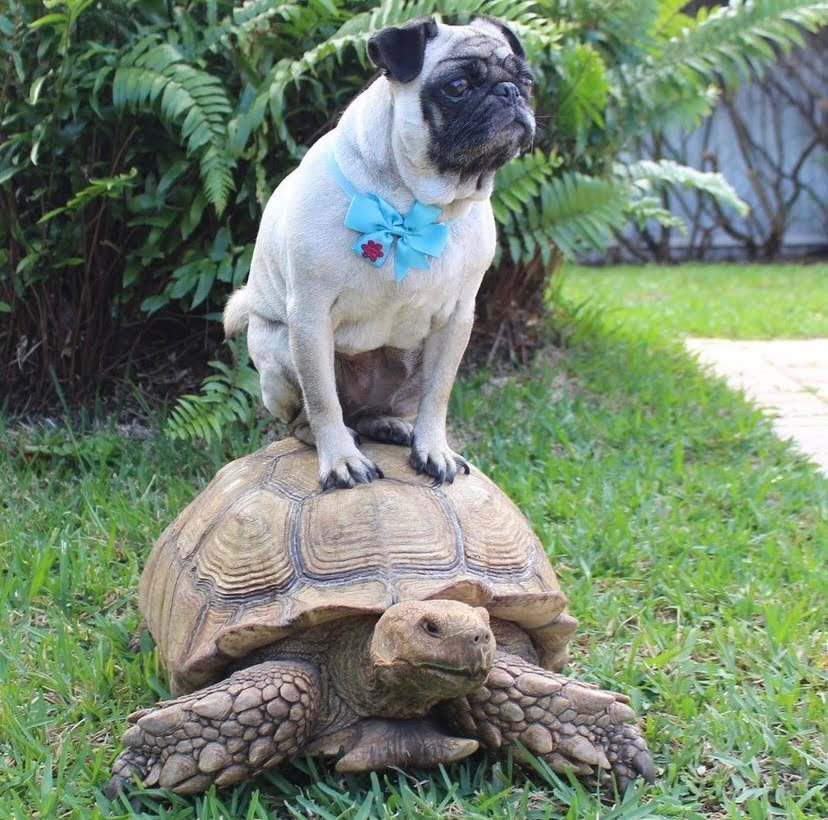
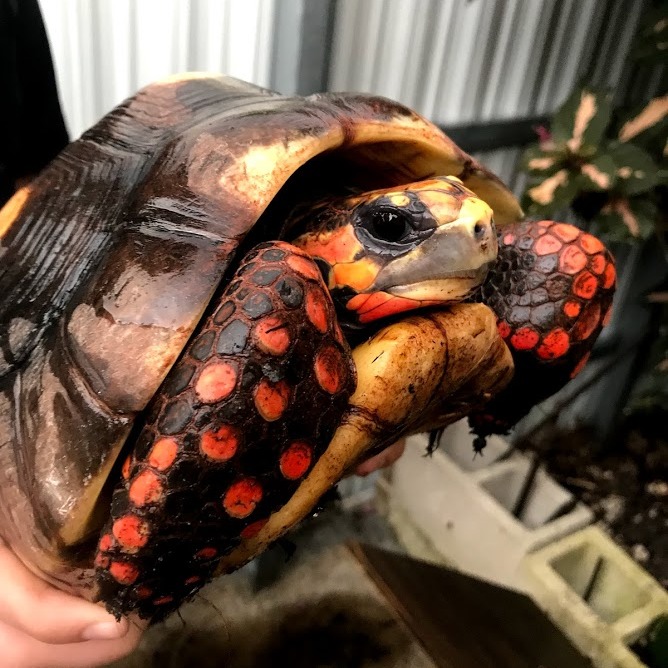
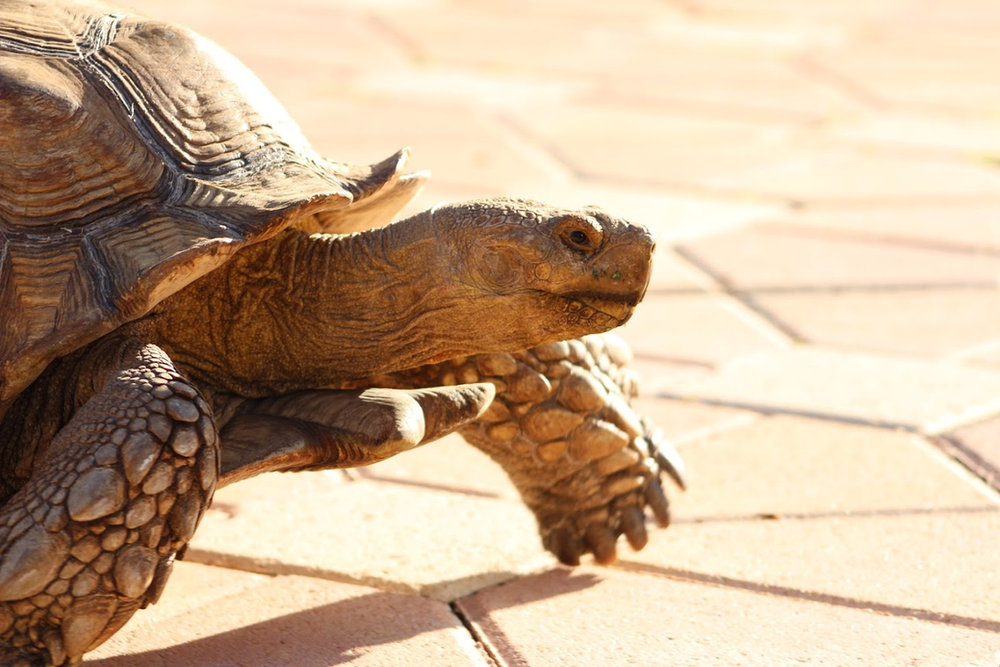
Centrochelys sulcata also known as African spurred-thighed tortoise is the third largest species of tortoise in the world. Sulcata tortoises grow to weigh over 100 pounds and measure between 18 - 30 inches when full grown. They can live between 50-100 years if cared for properly! It is important to plan for the future when buying one of these baby giants. A large tortoise will be hard to move and can be destructive if the enclosure is not maintained properly. Looking for something a little smaller? Check out our redfoot tortoises !
The most important thing to ensure a healthy and happy sulcata is the enclosure! Without a proper enclosure your tort will become sluggish, lose their appetite and it goes downhill from there.
For a baby the enclosure itself can be anything like a wooden tortoise house , glass tank or plastic tote, as long as you can get the proper conditions inside of them. I recommend a minimum enclosure size of 2 ft by 3 ft , with an enclosure this size you'll probably need to begin upgrading your tortoise between 1 and 2 years old or when it's 6 inches. For a full grown sully an enclosure of 10 ft by 10 ft will suffice but the more room the better. I recommend keeping them outdoors (fenced in of course) if weather permits (We'll get back to this).
After you have decided what you will use for your enclosure, the next step is the substrate. My favorite substrate for my tortoises and most of my other reptiles is cypress mulch . Substrates like sand or coco fiber that is sticky and messy should be avoided as it can cause impaction . I usually lay an inch of organic topsoil under the cypress mulch to hold humidity a bit better but it is not necessary. Another great addition is sphagnum moss or any other type of reptile safe moss available to you. I always put a moist ball of moss on the cooler side of the enclosure, to raise humidity for baby tortoises.
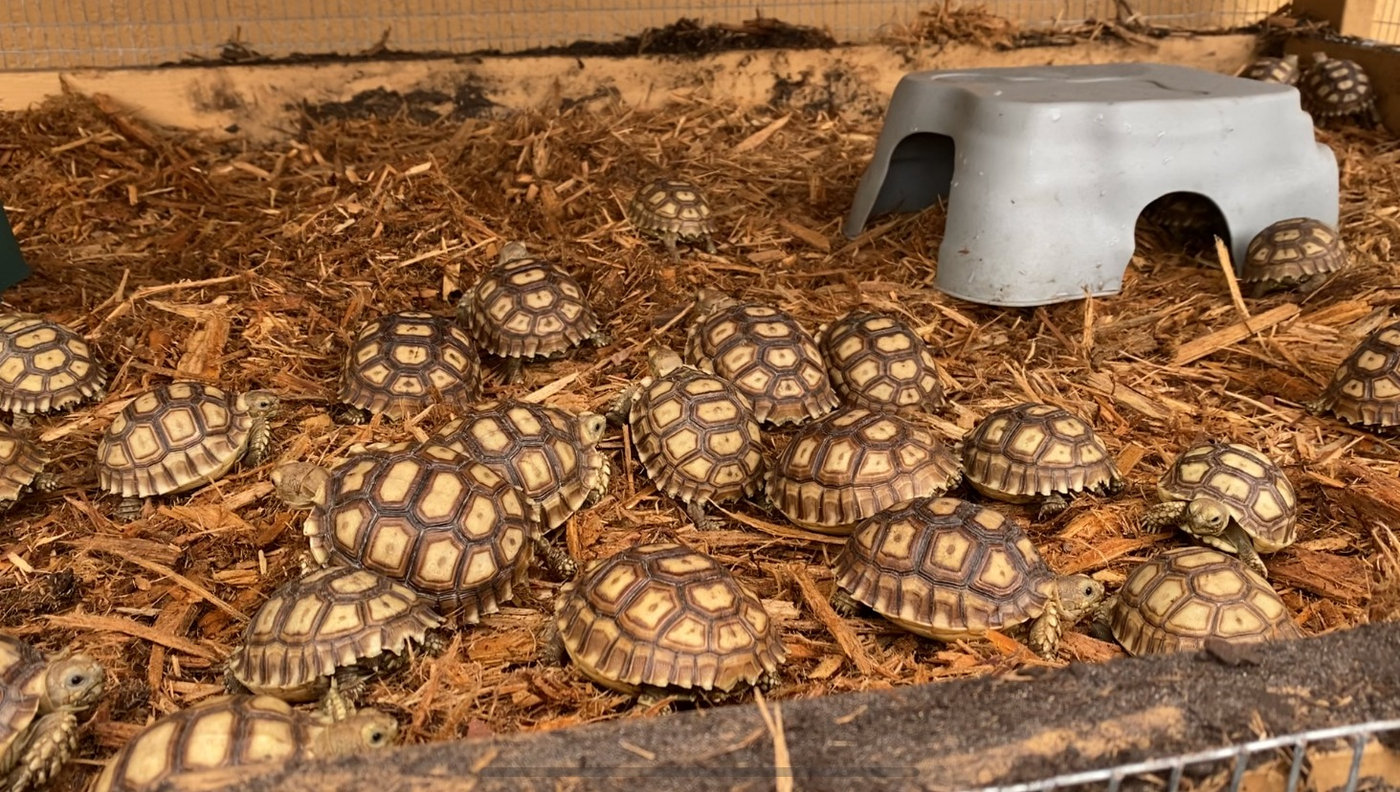
Tortoises need a place or two for hiding to feel comfortable. There are many options to use as hides. I've used roof tiles, plastic reptile hides , boxes, plant pots and pretty much anything that creates a low roof over the torts. Make sure it is secure so it doesn't fall on them.
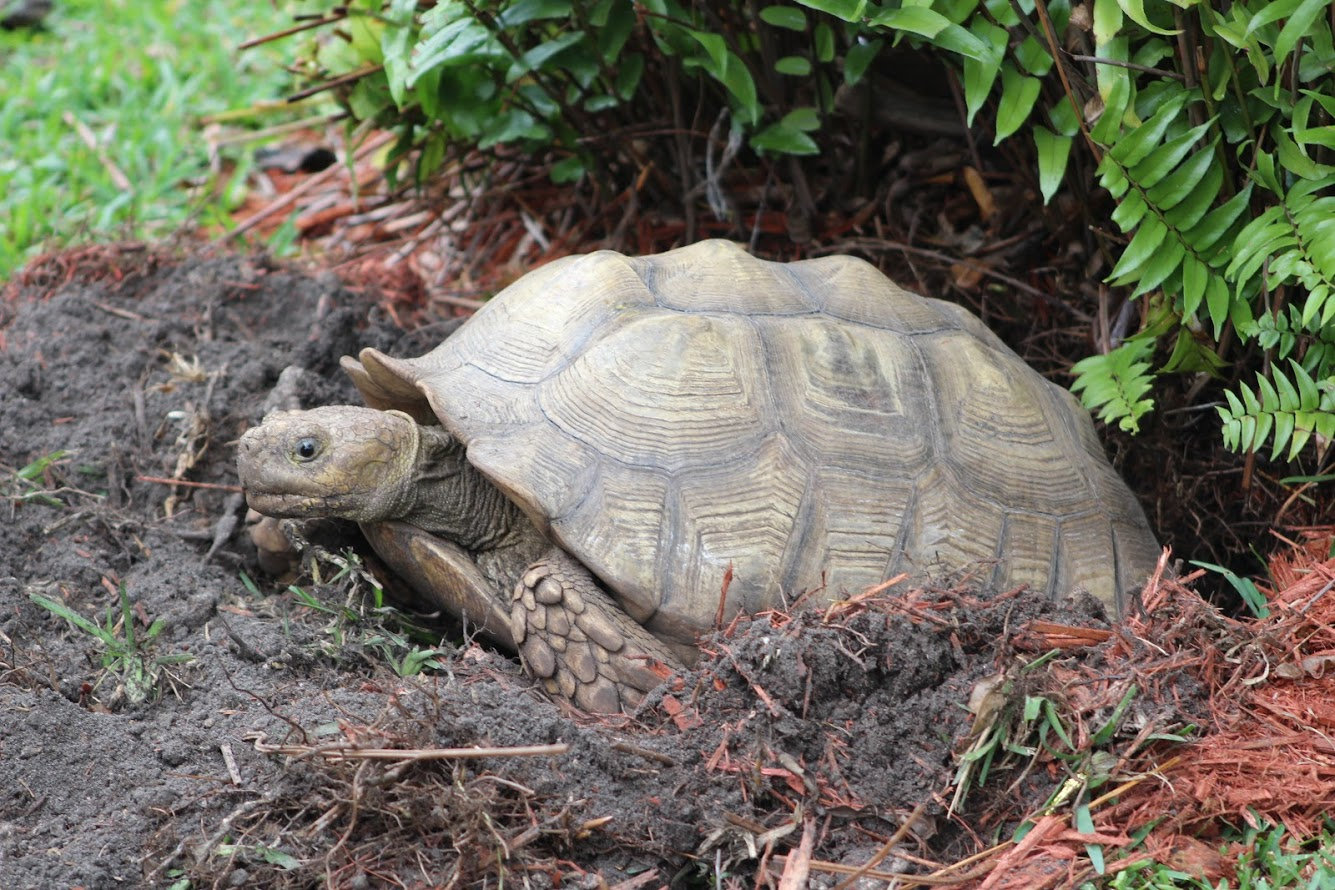
With adults this is still necessary, proper hides will take away the need for your tortoise to dig big tunnels. The African spurred tortoises are notorious for being destructive diggers however I have noticed if you offer lots of hides with solid floor they can't get through (Concrete, pavers, etc.) they are more likely to go in there than dig their own. I cover this hard ground with softer material preferably dirt so they can feel more natural but mulch and even hay would work too. Some torts just have that personality though and what I like to do in that case is throw concrete blocks in the tunnel and cover the entrance back up with dirt. This is important in my case because Florida has lots of rain that can make the tunnel collapse on the tort.
The last 2 things you'll need inside of your enclosure other than your baby sulcata tortoise is the food and water bowl . For a food bowl any low bowl or flat surface will work. I like to use tiles, or flat rocks for feeding tortoises because it's easiest for them to get on to and helps trim their beaks. A shallow water dish is important because you won't want your baby tortoise to be able to flip and possibly drown in it. For my larger tortoises I use ceramic plant pot saucers and for my babies I prefer to soak them, more on that later.
Basking Light
95–100°F
Cool Side
75–80°F
Hot Side
85-88°F
Night
Above 70°F babies
Humidity
70–80% babies
UVB
12 hours
Soaking
Daily 10-15 minutes How to Soak your Baby Tortoise
Diet
80–90% grasses What do Tortoises Eat
Now that you have your enclosure set up with the correct substrate, hides, and bowls you'll need to set up the correct lighting and heating. The lights should be on 12 hours a day, if you could use a timer to automatically turn them on and off that works best for both you and the tort as it keeps it consistent and on time.
Directly under the heat lamp you'll want it to be between 95 °-100°F. I always use a laser thermometer to measure the basking spot and a good light fixture to support the heat of the bulb. Place the heat lamp off to one side of the enclosure, away from the hide, water & food bowl and any other obstructions. You just want a flat empty basking area to prevent flipping over under the heat. The other side is the cool side that you'll want between 75°- 80°F. Red lights and night lights are not recommended. I recommend a ceramic bulb for heating because it does not create any light and can be left on at night if your home is too cold for your baby tortoise. I would never use a heat pad to reach basking temps especially from the bottom, tortoises may not notice underbelly heat and get burnt. Heat pads however can be used if it is too cold at night by placing it on the side of the tank or in a shed/hide from the top. At night temperature drops are natural but for babies under 2 years temps should never be under 70 °. Adults are stronger , I would recommend a heated shed to not have to carry the tort inside every winter. Here in Miami, it rarely gets under 50 ° one night or two at 50° is OK for an adult but if it becomes three or more consecutive nights I would definitely get them warmed up or bring them inside. If one odd night is cold (over 50°) I don't stress it with the adults (All my tortoises are extremely healthy with good immune systems a sick tortoise getting a little cold can be very bad), this of course is assuming temps will get back into at least the 70°s and that the tort can get sun to heat up after the cold night.
Other than heating you'll need the UVB bulb (UVB tube lights are better than regular UVB bulbs) UVB is a light naturally provided by the sun that a lot of reptiles including sulcata tortoises need to produce vitamin D3. Housed indoors I recommend having a UVB bulb on 12 hours a day. Vitamin D3 is used to process calcium, which is needed for proper shell growth and to prevent metabolic bone disease. If weather permits access to natural sunlight is better than UVB but constant direct exposure to the hot sun even for a few minutes can kill them so lots of shade must ALWAYS be accessible while outdoors. The best time to let a baby tortoise bask outside will be in the morning or evening when the sun is low and not too hot. UVB does not pass through glass so having them by a window unfortunately does not work.
The last thing you'll need to maintain is proper humidity. This is very important for good health and development of a baby tortoise. I raise humidity to 70%-80% 3 times a day with a spray bottle and keep the sphagnum moss in one corner and constantly moist for the baby tortoise to hide in as they please. For larger tortoises humidity is not as important but you still need to keep them well hydrated. An open top enclosure will be harder to maintain humidity in so if you can automate it with a reptile fogger or mister it would be best for you and the tort.
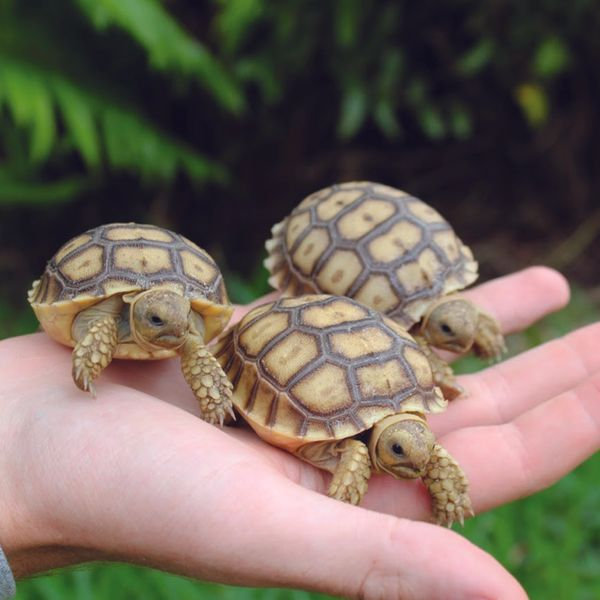
African spur thigh tortoises are from the Sahel, a semi-arid grassland region in the southern edge of the Sahara Desert. This gives people the common misconception that they do not drink or need any type of water and that is very incorrect. As babies hydration is most important, they may be from a semi-arid region but they do hatch during the monsoon season (rainy season) and spend a lot of time in underground burrows where it's warm and humid.
Soaking is very important in order to keep your tortoise well hydrated, for babies it is best to do it every day for at least 15 minutes. This video explains it best. You'll want to fill a container with a very shallow amount of warm water, you do not want it passing the bottom of their neck where the skin meets the shell. I then place the container with the baby tortoise inside somewhere half in the shade and half in the sun. Keep them supervised or provide a mesh cover to keep predators away. No glass or plastic to cover them. Remember the sun moves and that means so does the shade!
I do not keep any water bowls in my baby tortoise enclosures because they like to pee and poop while they drink, so with 15-20 babies in an enclosure it will become a health risk rather quickly. With one or a few tortoises a water bowl is a good idea but you must clean it daily.
I also mist down the enclosure with a spray bottle 3 times a day, in the morning, noon and evening. This keeps humidity up in the enclosure, gets the tortoise active and keeps them hydrated. I'm also obsessed with them and check on them dozens of times daily so you do not really need to spray them down as much as me but before feeding is a good idea if you don't soak your baby.
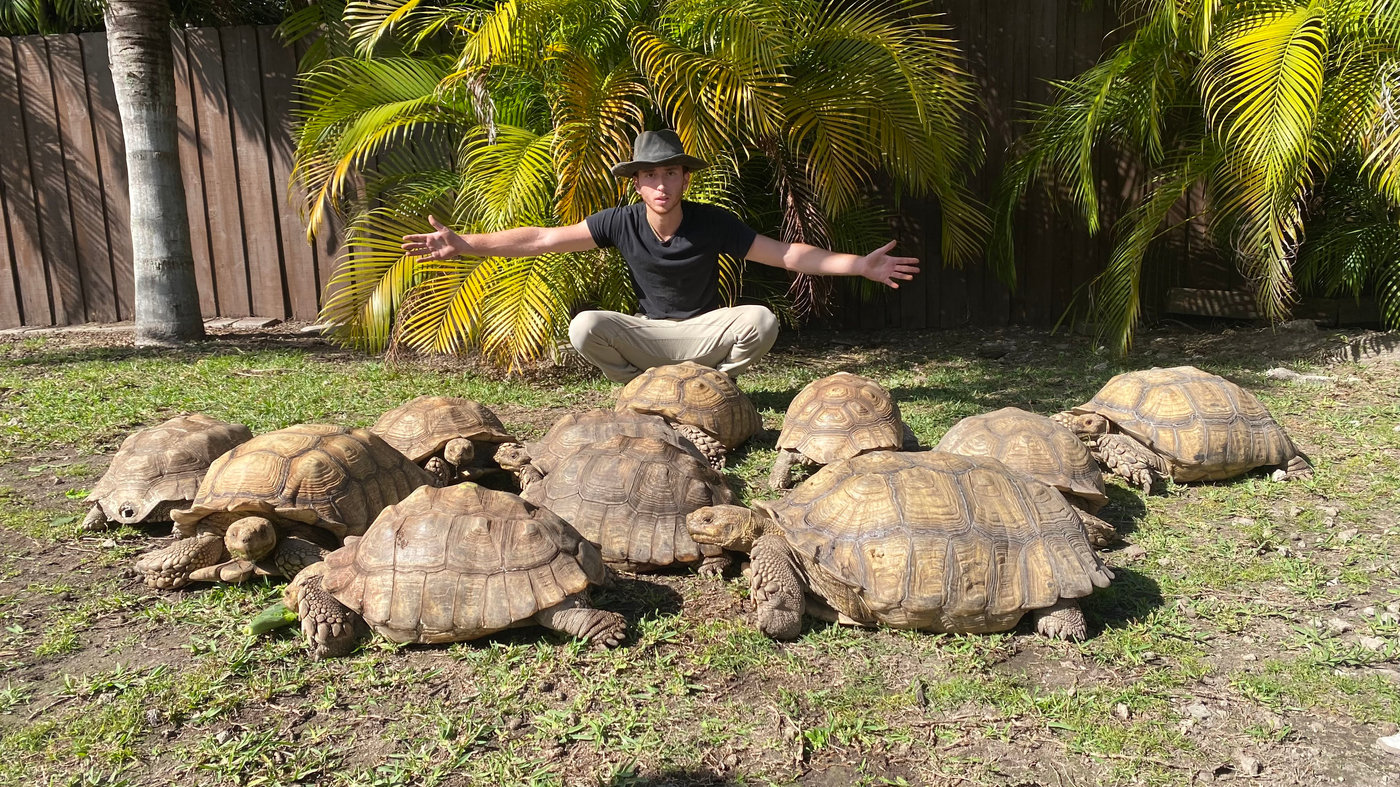
Diet should be 80-90% plants, grasses and weeds. I keep my 11 adult sulcatas in a quarter acre enclosure with grass and plants for them to graze on naturally. I give them a tortoise diet twice a week and sometimes left over fruits and vegetables in place of the tortoise diet. For my babies I am more strict with their diet. The main things that I offer them is opuntia cactus pads , hibiscus leaves and flowers , homegrown wheatgrass with no pesticides, mulberry leaves, collard greens, dark leafy greens, tortoise diet grasses and hay. Check out the What do Tortoises Eat guide for a food list and to learn more about tortoise. With the tortoise diet no additional supplements are needed however you can sprinkle reptile vitamins and calcium powder on their food in place of the tortoise diet. I 1000% recommend growing a garden for your torts my favorites to grow are opuntia cactus, hibiscus, mulberry and of course good ole grass.
Sexing a sulcata tortoise, particularly when they are young, can be challenging due to their subtle physical differences. It is extremely difficult to tell male or female until around 5 years or older. Adult males generally have a concave plastron, which helps them mount the female during mating. They also tend to have longer, thicker tails and a more pronounced gular scute (the projection under the chin) compared to females. Females usually have a flat plastron, shorter tails, and less pronounced gular scutes. The differences become more noticeable as the tortoises mature, making adults easier to sex than juveniles. Always handle tortoises gently and minimally when checking their physical traits to avoid causing them stress. A video will be able to better explain this one.
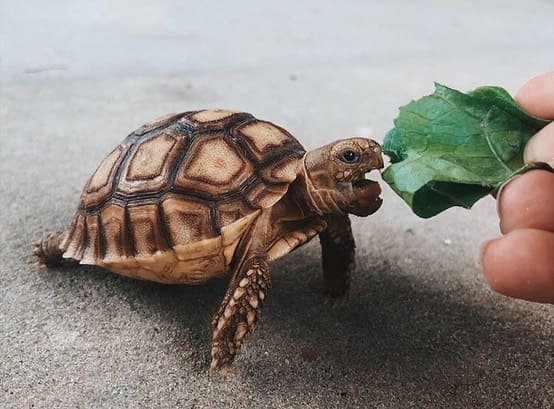
The African spurred tortoise, like any tortoise, should not be handled too often and too roughly. They do not like being off the ground for too long, and constantly carrying it can cause it to get stressed. You can tell a tortoise is stressed if they are peeing and pooping themselves, trying to get away or hiding in its shell and hissing. High stress especially in younger tortoises can be lethal. The best way to interact with a tortoise and provide a positive experience for both you and the animal is by taking it outside when weather permits and letting them graze in a safe pesticide free lawn but remember to stay out of direct hot sunlight. It is important to supervise your tortoise while outdoors if they are not in an enclosure, they can easily get away, be stolen or eaten by a predator. Hand feeding your tortoise is another great experience for you both, it may be difficult at first but they can easily come around. The first step in taming them is just being around them and letting them do their natural thing. Once they feel comfortable eating and moving normally around you, you can begin to get closer until eventually it'll eat right out of your hand. It may take time and patience, but all good things do. They can all be tamed and will eventually lose their fear.
If after reading the care guide you still think sulcata tortoises are the pet for you click the button below
If not check out what other reptiles I have available by clicking here
These care guides that I write are used daily and followed as law here at Shadow’s reptiles.
I am constantly working on improving them which in turn improves the quality of care for my animals and for my customers and their animals. I appreciate any and all feedback more than anything. In trade for your corrections, questions, and comments I promise to keep all care guides updated with the best possible care tips I can offer linked with updated YouTube videos and the products that I use for my animals.
If you wish to support us more directly take a look at our shop or become a member to unlock hidden blogs, YouTube videos, Giveaways and discounts. All the money we earn goes right back to caring for our animals and improving their futures, we appreciate all your support.