← Back to Quick Guides
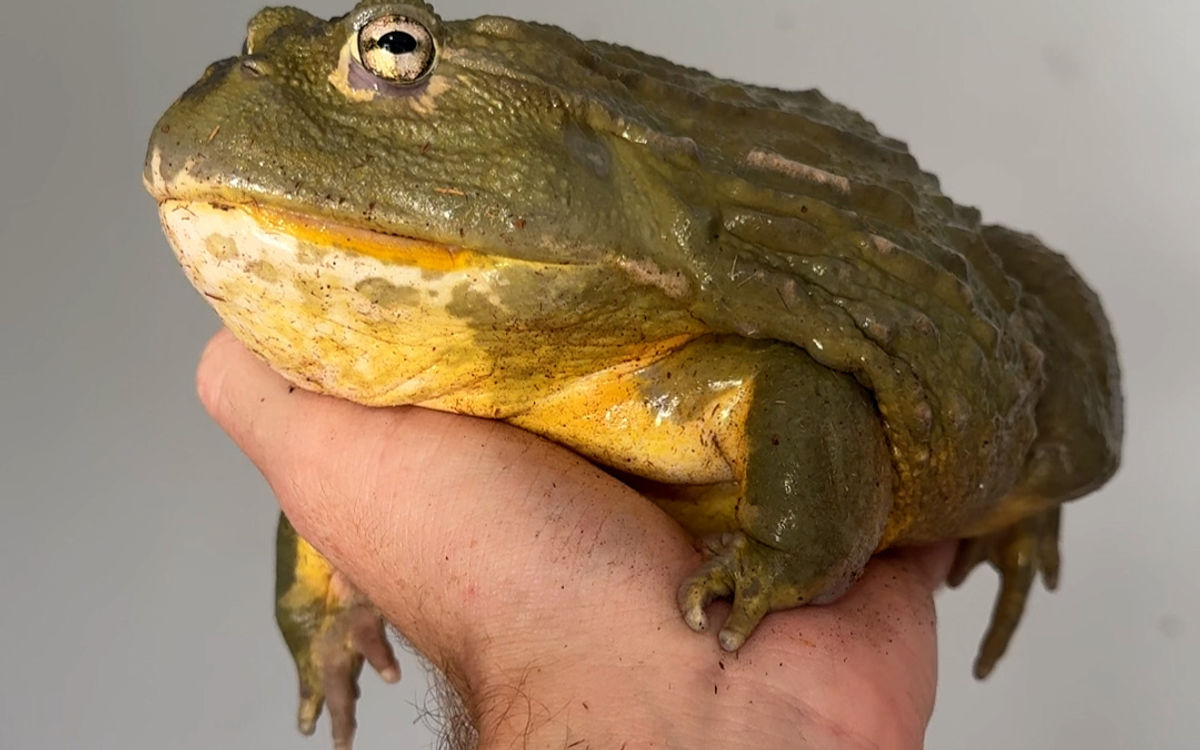
The African bullfrog, also called the Pixie frog, gets its name from its scientific name Pyxicephalus, not because it’s small—adult males are huge and heavy. They are one of the largest frog species in the world. Males commonly reach 7–10 inches and 2–4 pounds, while females stay smaller. Lifespan can reach 20–30 years in human care. Native to central and southern Africa, they live in semi-arid savannas, where they burrow underground to survive dry seasons. They are solitary, ambush predators, and extremely food-motivated. Mostly nocturnal. Their thick, armored-looking skin and massive head help them retain moisture and overpower prey. Fun fact: They can stay underground for months, forming a cocoon of shed skin to prevent dehydration.
A single adult needs a minimum 20–40 gallon enclosure with plenty of floor space. Use cypress mulch, eco earth, or a mulch/soil mix deep enough to burrow. Provide a large water dish for soaking. Ideal temperatures: Warm side 80–85°F, Cool side 74–78°F, with night temps 72–75°F. They tolerate slightly cooler nights but avoid drops below 68°F. Humidity should stay 60–80%. UVB is optional but beneficial at low levels (2.0–5.0). Always give hides and secure lids—bullfrogs can push up and escape.
Feed juveniles daily, adults 2–3 times per week depending on body condition. African bullfrogs are prone to overeating—obesity is common.
Offer water in a shallow, wide bowl they can easily climb in and out of; change daily. Dust insects with calcium without D3 1–2x weekly and multivitamin 1x weekly. Rodent-heavy diets cause gout—keep mammals limited.
Watch for fungal infections, red-leg disease, dehydration, impaction from swallowing substrate, and obesity. Chytrid fungus can be fatal. Poor water quality or dry conditions lead to skin issues. Always keep water clean and maintain humidity.
African bullfrogs are not a handling species. They bite, lunge, and are extremely food-driven. Handling causes stress, and they may inflate, hiss, or attempt to bite. If handling is necessary, use wet gloves to protect their sensitive skin and your fingers. For shows, they are not ideal because they cannot be freely handled by kids, require moisture, and can bite forcefully. They also poop unpredictably and cannot be boxed for long without drying out. Not recommended as a regular show animal.
Book an encounter and see this animal in person, or ask us anything about its care.
Book an Encounter