Introduction
- Scientific Name
- Aldabrachelys gigantea
- Species Name Meaning
- Named after the Aldabra Atoll in the Seychelles, its only natural home.
- Size & Lifespan
- 350–550 lbs; males can exceed 600 lbs. Carapace up to 4 ft. Lifespan 100–150+ years.
- Native Habitat
- Aldabra Atoll—grassy scrublands, coastal dunes, and mangrove edges.
- Behaviors
- Slow-moving grazers; enjoy basking; very food-motivated; curious but calm.
- Social Structure
- Semi-social—can be kept in groups if space is large enough.
- Activity Cycle
- Diurnal.
- Why They Look This Way
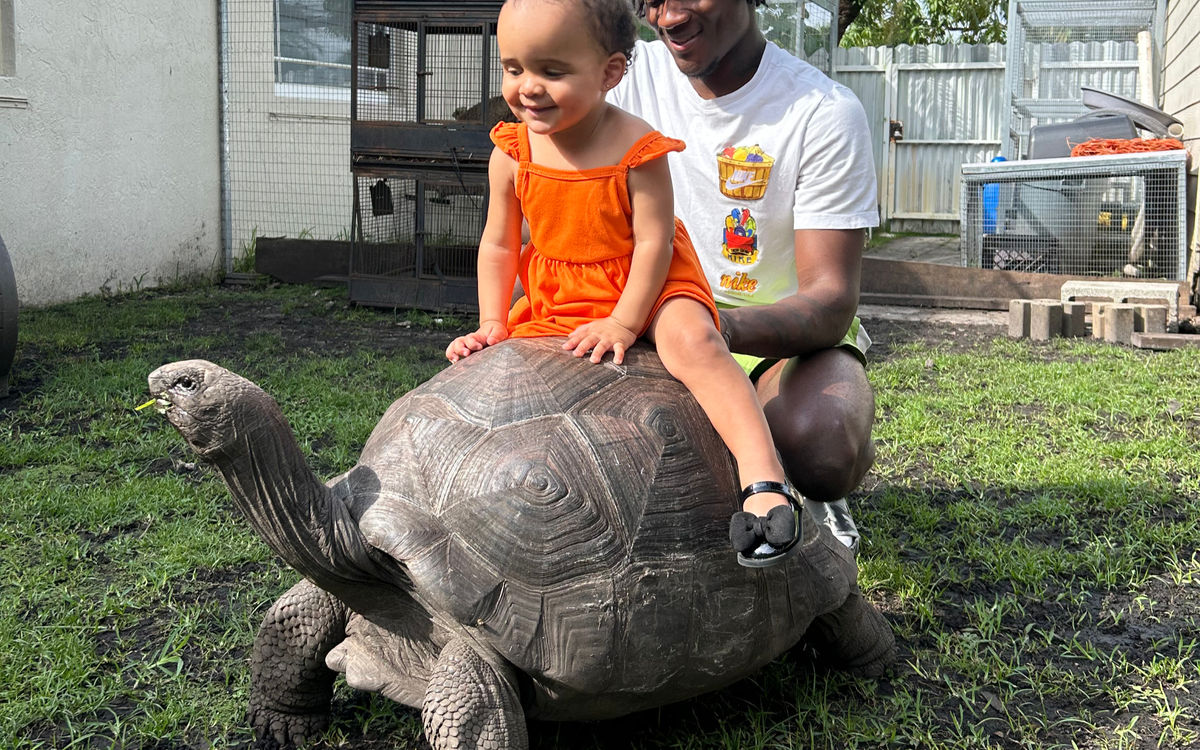
- Huge domed shell for protection; thick legs for supporting massive weight; long neck to reach brush.
Fun Facts
- One of the largest tortoise species on Earth.
- Known for forming “grazing herds.”
- Extremely strong—can push objects and fencing.
Enclosure
Aldabras require very large outdoor-focused enclosures. Minimum for juveniles: 8x8 ft. Sub-adults: 20x20 ft. Adults: 1,000 sq ft+ per animal with room to roam.
- Substrate
- Outdoor natural soil, grass, sand-soil mix; cypress mulch acceptable for indoor winter shelters.
- Temps
- Basking 95–100°F. Warm side 85–90°F. Cool side 75–80°F. Nights should not drop below 70°F.
- Humidity
- 60–80% for juveniles, 40–60% for adults.
- UVB
- Required—prefer real sun; use 10.0 UVB or Mercury Vapor lamp indoors.
- Heat Range/Tolerance
- Ideal range 75–95°F. Can tolerate up to 105°F with shade/water. Cold below 65°F is dangerous—must bring inside or provide heated shelter.
Diet and Hydration
Primarily high-fiber grazers.
Weekly Feeding Schedule (Juveniles)
- Daily
- Graze or 2–4 cups mixed greens / grasses.
- 2x/week: Mazuri LS tortoise diet (small handful).
Sub-Adults/Adults
- Daily grazing on grass/hay.
- 3–5 lbs of mixed greens daily depending on size.
- Mazuri 3–4x/week as supplement.
Food Categories
- Staples
- Bermuda hay, orchard grass, hibiscus leaves/flowers, mulberry leaves, cactus pads, collard greens, mustard greens, turnip greens, spring mix, weeds (dandelion, clover).
- Treats
- Squash, pumpkin, bell peppers, fruits (very limited).
- No Feed/Toxic
- Spinach, kale daily (ok rarely), iceberg, dog/cat food, animal protein, rhubarb, avocado.
Hydration
Large shallow soaking area; they drink heavily after soaks. Offer clean water daily. Juveniles benefit from 2–3x weekly warm soaks.
Supplements
Calcium w/o D3 2–3x/week; with D3 once weekly if indoors. Multivitamin once weekly.
- Diet Behavior Notes
- Very food motivated; may push or climb to reach food—place food low and secure.
Health
Common risks include
- Respiratory infections (cold exposure).
- Pyramiding from low humidity or poor diet.
- Parasites (internal & external) from outdoor grazing.
- Shell rot if kept damp without heat.
- Gout from high-protein diets.
Handling
Aldabras are gentle but extremely heavy and powerful.
Handling is minimal once large; juveniles are handleable.
They do not get stressed easily but dislike being lifted. Move adults with carts, boards, or multiple handlers.
- For shows
- Juveniles/sub-adults can be excellent—they’re calm, friendly, slow-moving, and great for touching.
Adults are too large for transport but great for on-site encounters.
Requirements for Show Animals
- Super friendly — YES
- Not messy — Usually yes; low poop frequency
- 5+ shows/day — Juveniles yes
- Boxable — Juveniles yes
- Good with heat — Excellent
 Indian Star Tortoise