← Back to Quick Guides
Fun Facts
Adult frilled lizards need a tall, spacious, arboreal enclosure. A single adult should have at least 4 ft long × 2 ft wide × 4–6 ft tall, with many climbing branches. Cypress mulch, soil/sand mix, or eco-earth are safe substrates that maintain humidity without mold issues.
Provide a basking spot of 100–110°F, with a cool side of 80–85°F and ambient 85–95°F. Night temps can drop to 75–80°F.
Humidity should stay around 50–70%. Strong UVB is REQUIRED (T5 HO 5.0–10.0).
Ideal range is 85–95°F. They can tolerate slightly cooler nights but should not be kept below 70°F or above 115°F for long periods.
Frilled lizards are insectivores with occasional small vertebrate or fruit intake.
Weekly Feeding Schedule (Adult)
Staple foods include crickets, dubia roaches, discoid roaches, superworms, hornworms, silkworms, and black soldier fly larvae.
Treats include pinky mice (rare), small amounts of berries or mango, and waxworms.
Hydrate by offering a clean water dish, misting lightly, and allowing droplets on leaves/branches. Many drink from surface water more than bowls.
Calcium with D3 should be provided 2–3× per week, multivitamin 1× per week.
Common issues include parasites (coccidia, pinworms), mouth rot, metabolic bone disease (if UVB or calcium is lacking), and respiratory infections if kept too humid and cool. External stress can lead to refusal to eat. No known uniquely fatal disease, but improper husbandry can quickly cause decline.
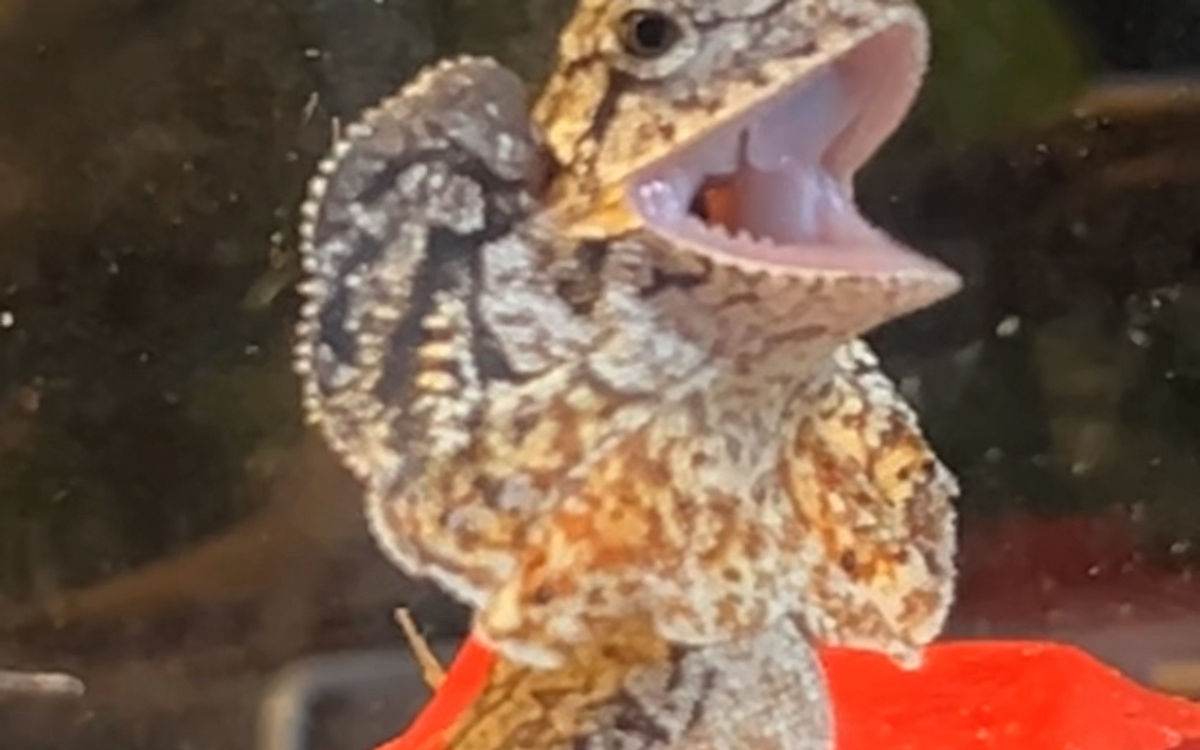
Frilled lizards can be skittish and stress easily with rough handling. They rely on speed and bluff displays rather than biting. Too much handling can increase stress and cause them to run or frill open. For handling, support the entire body, keep movements slow, and work from below rather than above (top-down approach triggers fear).
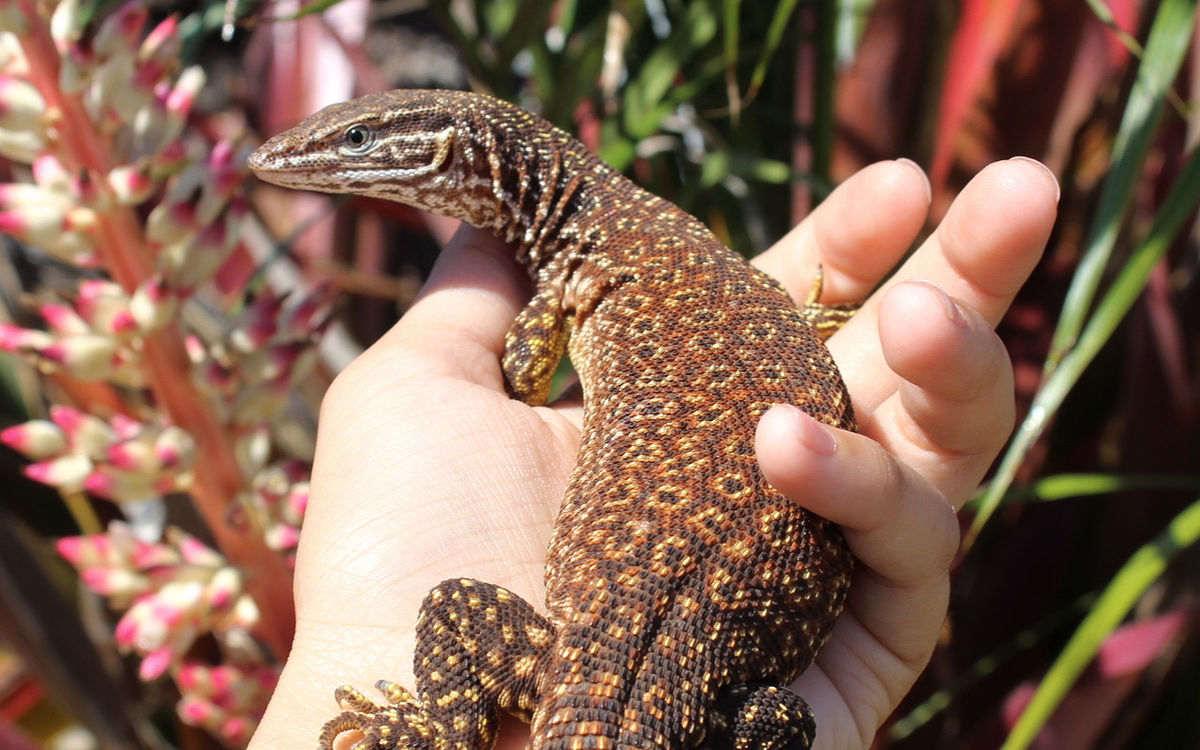
Varanus acanthurus — “Spiny-Tailed Monitor,” named for the ring of sharp tail spines used for defense.
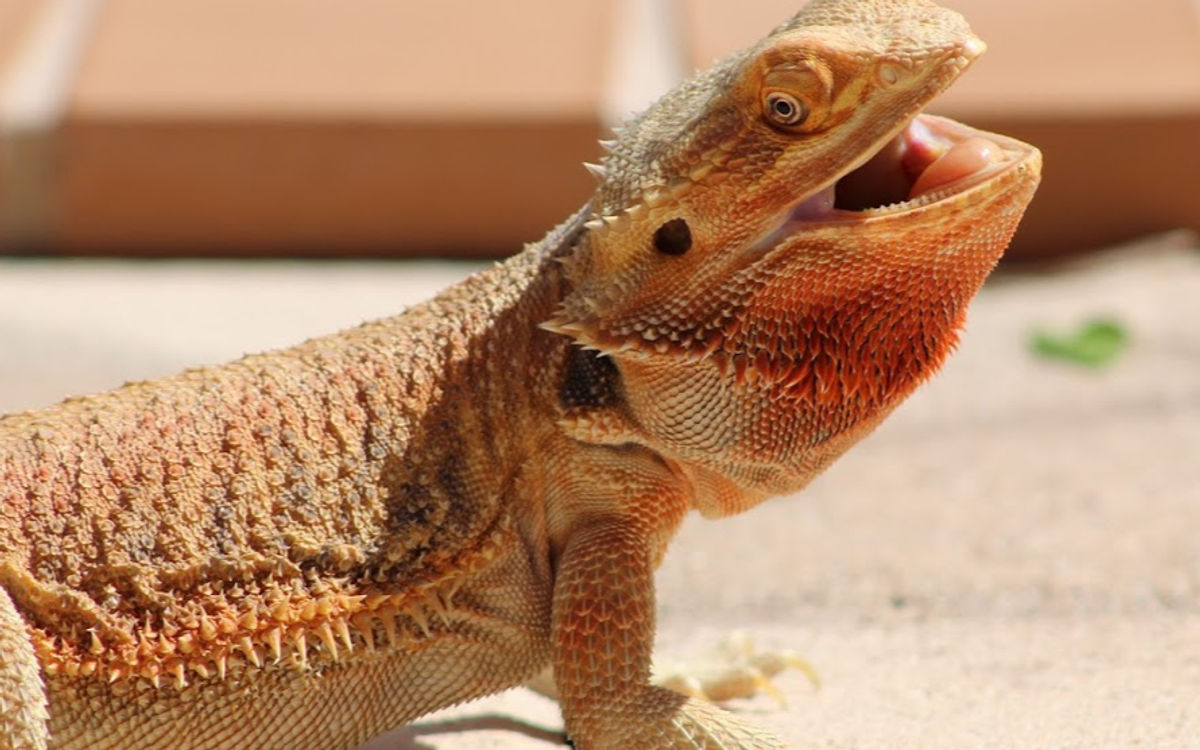
Scientific Name: Pogona vitticeps Common Name Origin: Called “bearded” dragons because they puff out their throat “beard,” which darkens when stressed or displaying.
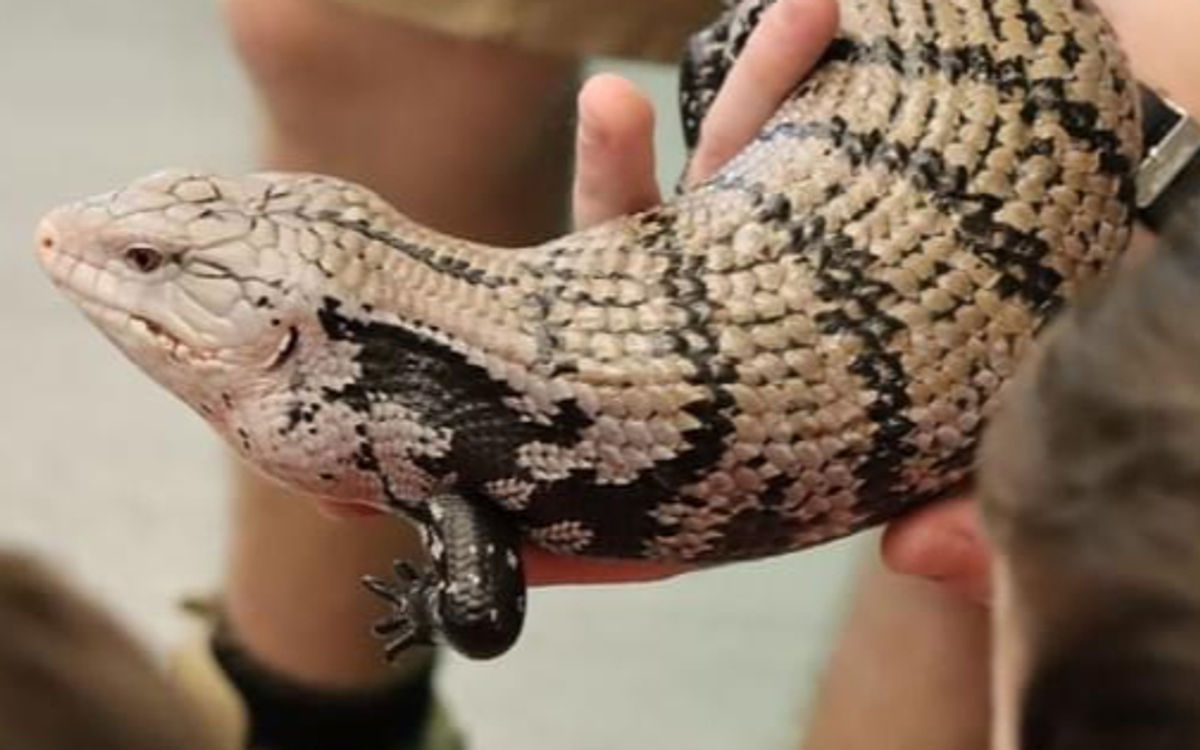
Scientific Name: Tiliqua scincoides (most common species in captivity, though several regional species exist).
Book an encounter and see this animal in person, or ask us anything about its care.
Book an Encounter