Bearded Dragon
← Back to Quick Guides

Bearded Dragon

LizardsPrintable care sheet
Full guideBearded Dragon Care GuideRead the in-depth guide →
Scientific Name
Pogona vitticeps
Common Name Origin
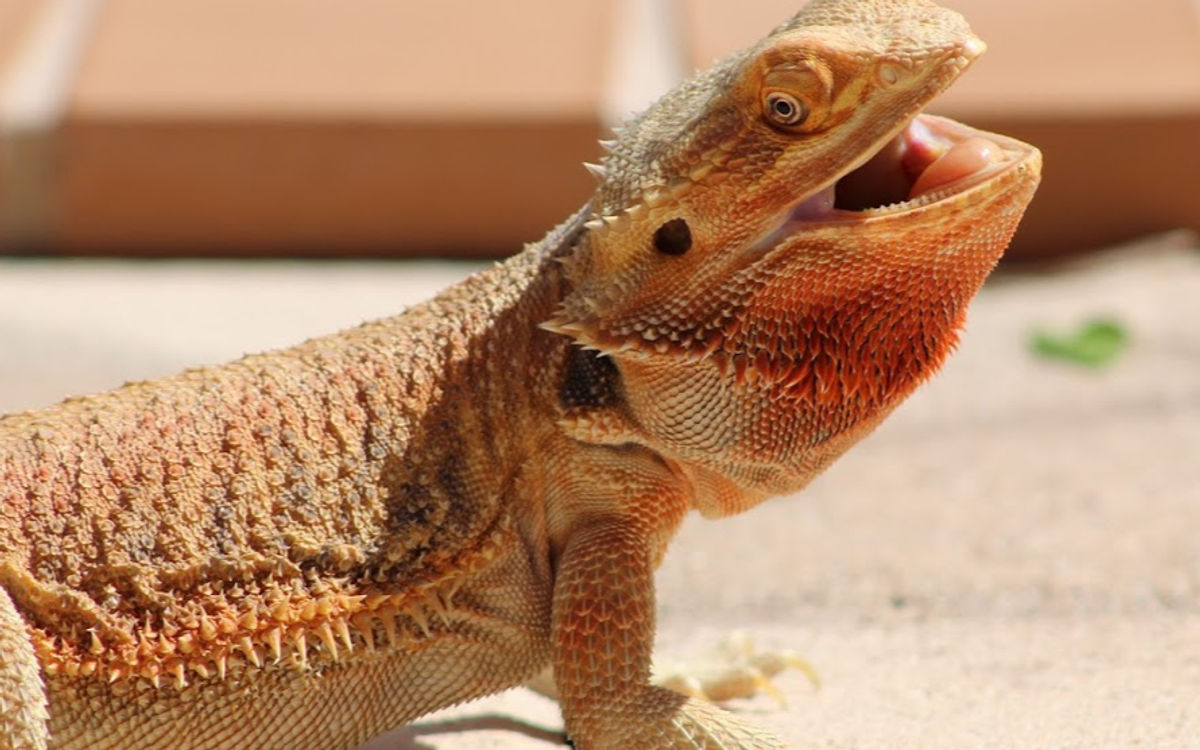
Called “bearded” dragons because they puff out their throat “beard,” which darkens when stressed or displaying.
Size & Lifespan
16–24 in.; 8–12+ years.
Native Range
Central Australia — arid deserts, scrublands, woodlands.
Behaviors
Head-bobbing, arm-waving, basking, burrowing, climbing.
Social
Solitary; only together for breeding.
Activity
Diurnal.
Why They Look This Way
Spikes and beard for defense; wide body for heat absorption; strong limbs for digging and climbing.

Fun Facts

  • Can “run” on two legs.
  • Change beard color during mood shifts.
  • Known as one of the most docile reptiles in the world.

Enclosure

Ideal Size
Adult: 4 ft x 2 ft x 2 ft minimum (120 gal); bigger is better. Juveniles: 40 gal minimum.
Substrate
Cypress mulch only if kept dry; best options are tile, reptile carpet, paper, or bioactive mix.
  • Temperatures:
Basking
100–110°F
Cool Side
75–85°F
Night
65–75°F
Humidity
30–40%
UVB
Required (T5 HO 10.0 or Arcadia 12%).
  • Tolerance:
Cold
Under 60°F = unsafe; may brumate but should stay warm indoors.
Heat
Over 115°F can be fatal.

Diet and Hydration

Weekly Feeding Schedule (Adult)

  • Daily salad in the morning (collard greens, mustard greens, squash).
  • Insects 2–3 times per week (5–10 appropriately sized crickets, dubia roaches, or BSFL).
  • Occasional treats once per week (berries, hornworms).

Weekly Feeding Schedule (Juvenile)

  • Insects daily (2–3 small feedings).
  • Salad offered daily.

Food Categories

Staples
Collard greens, mustard greens, dandelion greens, squash, dubia roaches, BSFL.
Treats
Berries, melons, hornworms, superworms.
No Feed/Toxic
Avocado, fireflies, rhubarb, spinach, iceberg lettuce.
Hydration
Provide a shallow water dish; mist greens lightly. Offer weekly soaks if hydration seems low.
Supplements
Calcium with D3 3–4x per week for juveniles, 2–3x per week for adults. Multivitamin once a week.
Behavior Notes
Some dragons prefer hand-feeding greens as they like movement; many eat less during brumation.

Health

Common risks include

  • Metabolic Bone Disease (MBD) from poor UVB/calcium.
  • Parasites (pinworms, coccidia).
  • Respiratory Infections from low temps/high humidity.
  • Impaction from loose substrate or oversized bugs.

Handling

  • Extremely docile; good for beginners.
  • May stress if handled too much as juveniles but adults tame well.
  • Support chest and belly; allow legs to rest on hand or arm.
  • Avoid sudden movements or grabbing from above (predator behavior).
Great for shows
calm, safe, rarely bite, easy for kids to hold.

Requirements for Show Animals

Friendly
Yes, bearded dragons are extremely handleable.
Not Messy
Rarely poop when warm and well-fed; controllable.
  • Can Do 5+ Shows: Yes, calm energy and easy to travel with.
Can Be Boxed for a Day
Yes, as long as temperature is safe.

Want to Meet One?

Book an encounter and see this animal in person, or ask us anything about its care.

Book an Encounter