← Back to Quick Guides
Fun Facts
Adult Cuban rock iguanas need a very large outdoor-style habitat—minimum 8 ft x 4 ft x 6 ft for one, larger always preferred. Outdoors in Florida is ideal. Use cypress mulch, sandy soil, or a soil/sand mix that allows digging. Provide strong climbing rocks, large logs, and a secure hide.
Cuban rock iguanas are primarily herbivores.
Weekly Feeding Schedule (Adult 10–20 lbs):
Staples
Collard greens, mustard, turnip, dandelion greens, hibiscus leaves/flowers, squash, cactus pads (opuntia), green beans, escarole, endive, arugula, mango (sparingly), papaya.
Treats
Berries, banana, apple, carrots, sweet potato, small amounts of soaked Mazuri tortoise diet.
No Feed/Toxic
Spinach, iceberg lettuce, rhubarb, avocado, onions, animal protein (for adults).
Hydration
Provide a large water bowl for soaking + daily misting of greens. They hydrate mostly from food moisture and leafy greens.
Supplements
Diet Behaviors
They may head-bob, stomp, or tail whip around food if territorial. Some individuals try to eat bright-colored objects—avoid bright décor.
Watch for
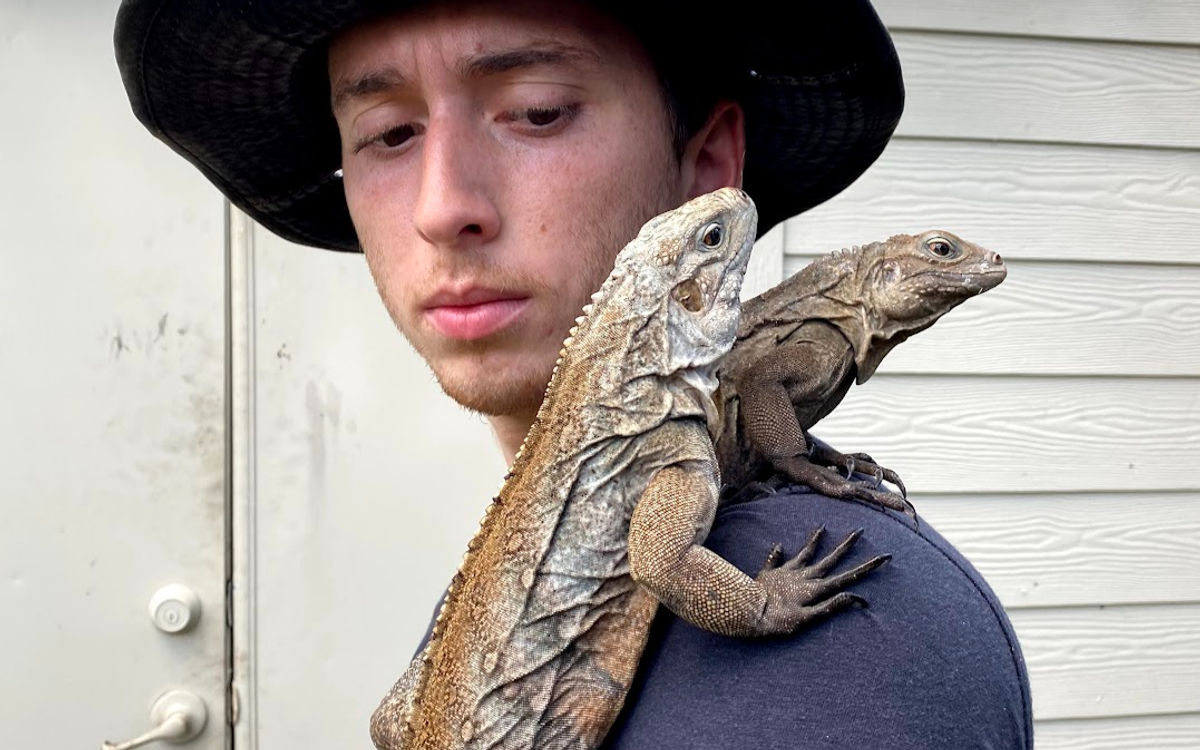
Cuban rock iguanas are powerful, but many become very tame with consistent handling. Always support their full body weight with two hands. Watch for signs of stress: puffing up, head-bobbing, tail whipping, or fleeing.
They can get stressed with too much handling early on—work slowly and build trust. Once bonded, they tolerate handling well and can be very calm.
For shows
A well-socialized Cuban rock iguana can be a fantastic show animal if hand-raised and extremely friendly. They present well visually, rarely bite when tame, and are calm when supported properly.
However
Can do 5+ shows/day: Yes, if tame and conditioned.
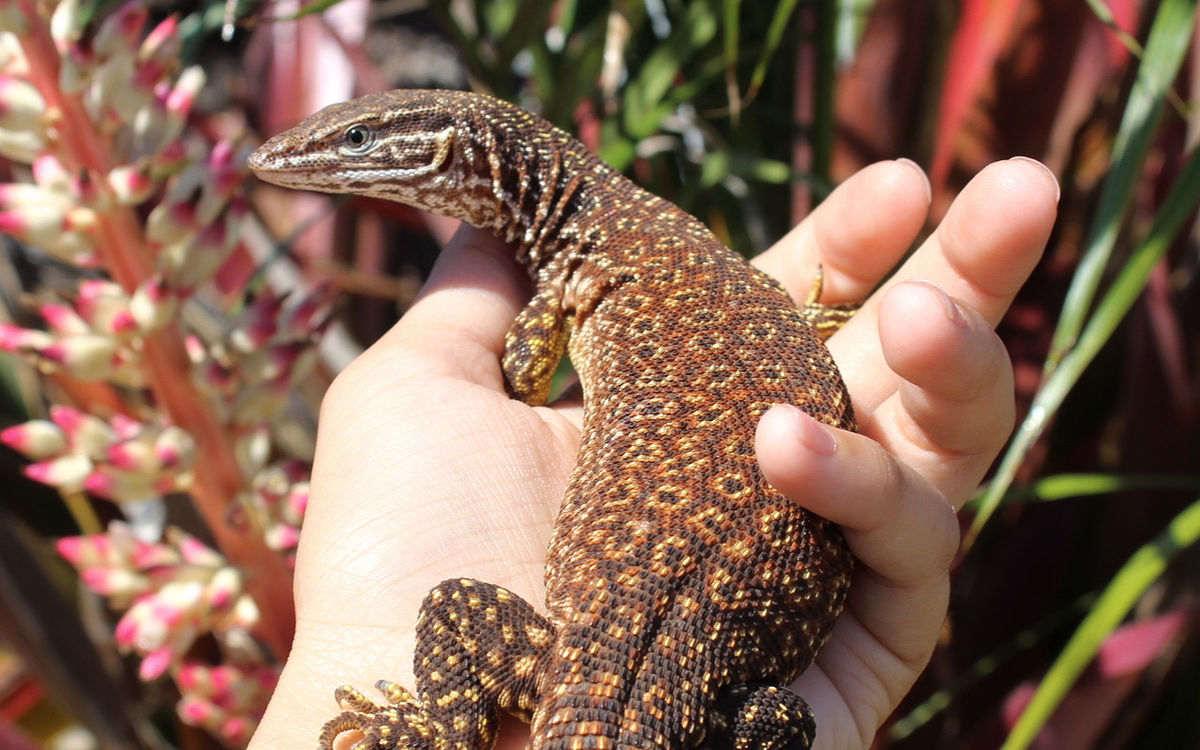
Varanus acanthurus — “Spiny-Tailed Monitor,” named for the ring of sharp tail spines used for defense.
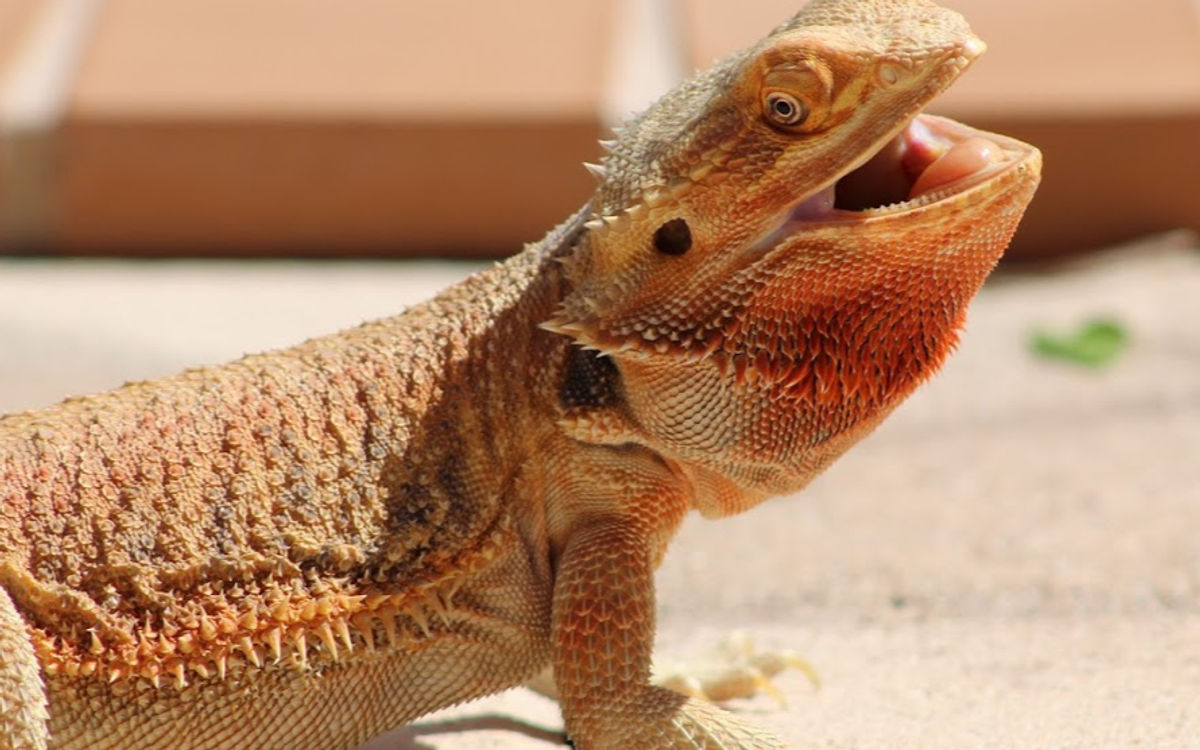
Scientific Name: Pogona vitticeps Common Name Origin: Called “bearded” dragons because they puff out their throat “beard,” which darkens when stressed or displaying.
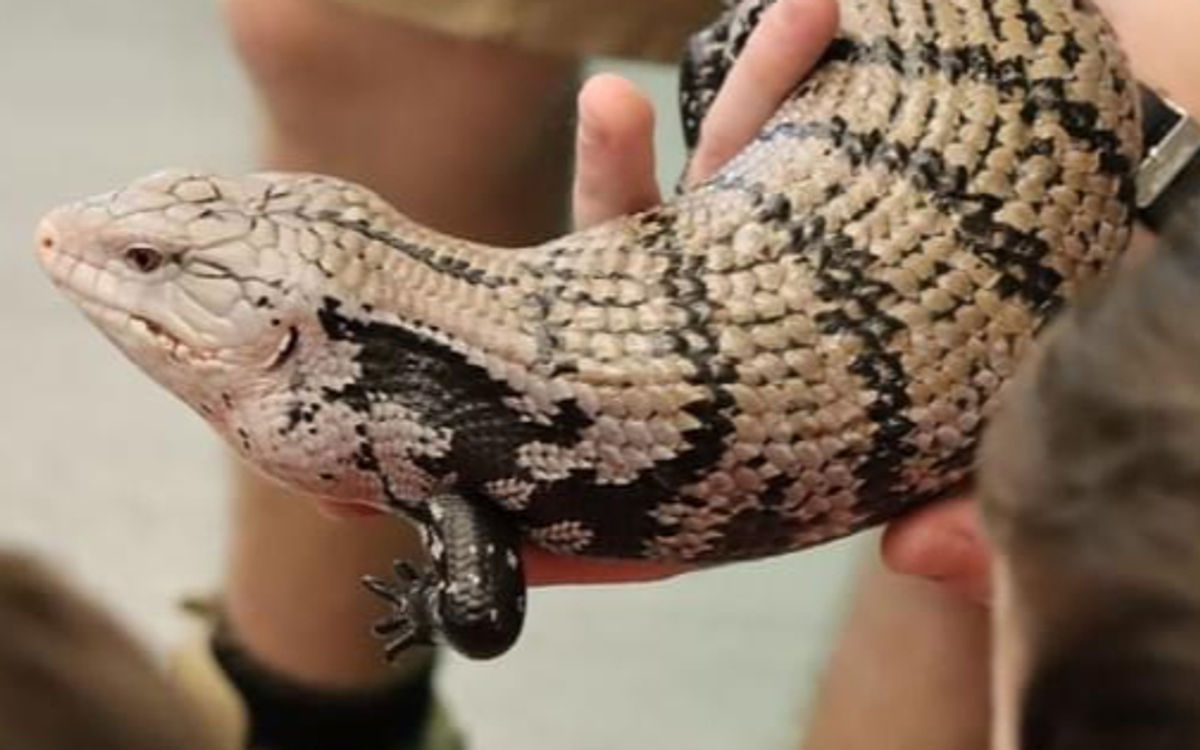
Scientific Name: Tiliqua scincoides (most common species in captivity, though several regional species exist).
Book an encounter and see this animal in person, or ask us anything about its care.
Book an Encounter