Red-Eyed Croc Skink
← Back to Quick Guides

Red-Eyed Croc Skink

LizardsPrintable care sheet
Scientific Name
Tribolonotus gracilis
Species Name Meaning
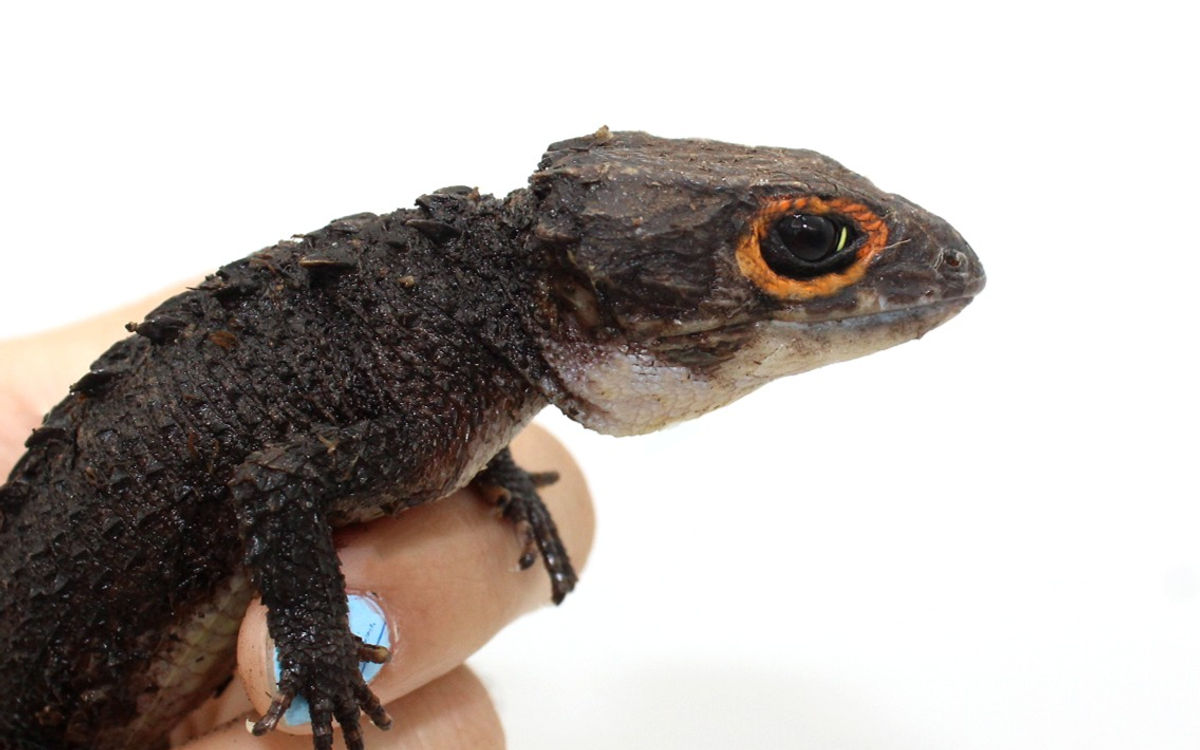
Called “crocodile skink” because of its armor-like dorsal scales and ridges that resemble a tiny crocodile, and “red-eye” for the bright orange/red ring around its eye.
Size & Lifespan
7–10 inches; usually 5–10 years in captivity.
Native Range & Habitat
Found in Papua New Guinea in cool, humid tropical forests. They stay near the forest floor, often hiding under leaf litter, logs, and mossy cover.
Behaviors
Extremely shy, freezes when threatened, and often plays dead. Very secretive and prefers hiding over exploring.
Group or Solitary
Solitary; males will fight if housed together and pairs should only be kept for breeding.
Activity Cycle
Nocturnal.
Appearance
Rough, crocodile-like dorsal plates provide protection; the orange eye ring likely helps with signaling or camouflage in dim forest light.
Fun Facts
They vocalize softly when stressed, can drop their tail, and are known as one of the most “dragon-like” reptiles.

Enclosure

Ideal Size
A single adult does well in a 20-gallon long tank; larger is always better for humidity stability.
Substrate
Moisture-retaining substrate—cypress mulch, sphagnum moss, coconut husk mix; deep layers for burrowing.
Temps & Humidity
Basking 82–85°F, ambient 72–78°F, cool side 70–72°F. They do not tolerate heat well—avoid temps above 85–86°F. Humidity 70–90%.
UVB
Optional but beneficial (low-output 2.0 or 5.0).
Climate Tolerance
Ideal zone is 72–78°F. They can tolerate brief dips to 68°F but will stress above 85°F.

Diet and Hydration

Weekly Feeding Schedule

  • 3–4 feedings per week
  • 3–6 appropriately sized insects per feeding depending on size/age

Food Options

Staples
Dubia roaches, crickets, mealworms, small superworms, black soldier fly larvae
Treats
Waxworms, hornworms
No Feed/Toxic
Fireflies, wild-caught insects, anything with bright warning coloration
Hydration
Provide a large shallow water dish—preferably wide enough for soaking. Mist enclosure daily to maintain humidity.
Supplements
Calcium with D3 once a week; multivitamin every other week.
Diet Behaviors
They may refuse food if stressed, exposed, or over-handled; they eat almost exclusively at night.

Health

Common Issues

  • Respiratory infections from low temps
  • Skin infections from poor humidity or dirty substrate
  • Internal parasites from wild-caught insects
  • Stress-related anorexia
Potentially Fatal Risks
Overheating, dehydration, severe RI, and untreated parasitic infections.

Handling

Handling Behavior
Very shy, easily stressed, and will freeze, squeak, or try to run. They may “play dead” when frightened.
Stress Risk
High—this species does not enjoy handling and prolonged handling can lead to refusal to eat.
How to Handle
Scoop gently from underneath; never grab from above. Keep handling brief and low to the ground.
Show Suitability
Not recommended for shows. They stress easily, are not handleable for kids, and may refuse food for days after handling.

Requirements for Show Animals

  • Friendly & handleable by anyone — NO
  • Not messy — YES
  • Can do 5+ shows a day — NO
  • Can be boxed up for a day — NO (high stress)
  • Good with heat — NO
Conclusion
Not a show-appropriate species

Want to Meet One?

Book an encounter and see this animal in person, or ask us anything about its care.

Book an Encounter