- Scientific Name
- Hydrosaurus spp.
- Why the Name
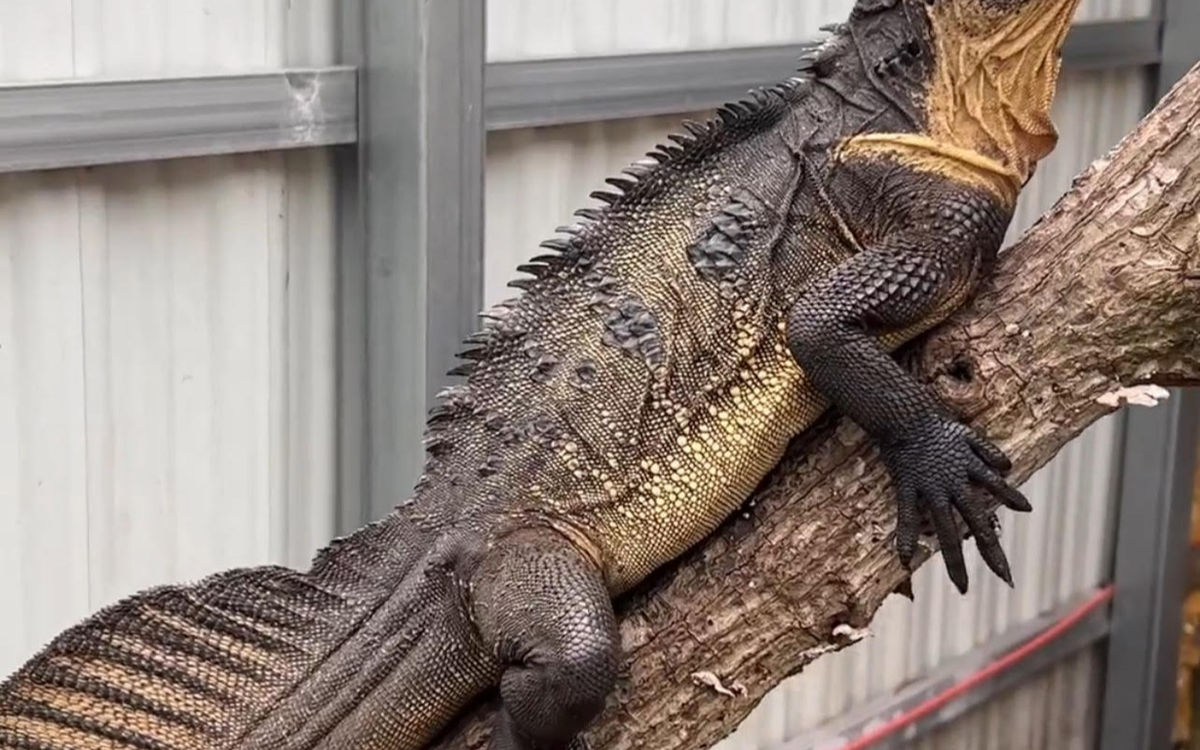
- Called “sailfin” for the large, dramatic crest (sail) on their tail and back, used for display and stability while swimming.
- Size & Lifespan
- 3–4 ft long; 15–20+ years in captivity with proper care.
- Native Habitat
- Philippines, Indonesia, New Guinea. Found along rivers, mangroves, forest edges, and humid lowland waterways.
- Behaviors
- Excellent swimmers; use tail to glide through water. Can be skittish and fast but calm down with consistent care.
- Group or Solitary
- Mostly solitary; males territorial.
- Activity Cycle
- Diurnal.
- Why They Look This Way
- Their sail allows speed and maneuverability in water, aids in thermoregulation, and helps during mating displays.
Fun Facts
- One of the few large lizards that rely heavily on aquatic escape.
- Can hold their breath underwater for several minutes.
- Males develop massive, colorful sails as they mature.
Enclosure
Sailfins need large, tall, water-access enclosures. Ideal size: minimum 6 ft L × 3 ft W × 6 ft H for adults; larger strongly preferred. Provide a large water basin big enough for full-body soaking and swimming.
- Substrate
- Cypress mulch, reptisoil, or a soil/mulch mix. Must hold humidity without molding.
Temps & Humidity
- Basking
- 120–130°F
- Warm side
- 90–95°F
- Cool side
- 78–85°F
- Night
- 75–80°F
- Humidity
- 70–90%
- UVB
- Strong UVB required (Mercury vapor bulb or T5 HO 10.0/12%).
- Tolerance
- Do not tolerate cold below 70°F; can handle heat into mid-90s as long as they have water and shade.
Provide climbing branches, high basking perches, dense foliage, and a large water area.
Diet and Hydration
Sailfin dragons are omnivores that shift more toward plant matter as adults.
Weekly Feeding Schedule
- Juveniles
- Daily feeding—70% insects, 30% greens/veg.
- Sub-adults
- 5–6 days/week—50% insects, 50% greens/veg.
- Adults
- 4–5 days/week—30% insects, 70% greens/veg.
- Portions
- Insects equal to size of space between eyes; greens offered in handful-sized portions based on body size.
Staples
- Greens/Plant
- Collard, mustard, dandelion greens, hibiscus leaves/flowers, squash, cactus pads, green beans
- Proteins
- Dubia roaches, crickets, superworms, BSFL, cooked eggs (small amounts)
- Fruits (sparingly)
- Berries, mango, papaya
- Aquatic items (optional)
- Small fish or snails, rarely, as enrichment
- Treats
- Banana, watermelon, hornworms, waxworms.
- No Feed/Toxic
- Avocado, fireflies, onion, rhubarb, any wild-caught insects.
- Hydration
- Provide a large water basin for soaking and swimming. Daily clean water. Mist enclosure to maintain humidity.
Supplements
- Calcium w/o D3
- 3–4× weekly juveniles; 2× weekly adults
- Calcium w/ D3
- 1× weekly
- Multivitamin
- 1× weekly
- Behavior Notes
- Skittish individuals may avoid food if stressed; offering food tongs can help.
Health
Common risks
- Parasites (internal/external) from high humidity
- Respiratory infections if humidity is too low or enclosure is too cool
- MBD if UVB or calcium is inadequate
- Tail rot or fungal infections in dirty or stagnant water
- Egg binding in females without nesting sites
Immediate vet care is required for lethargy, wheezing, swollen jaws, tail infections, or sudden refusal to bask.
Handling
Sailfin dragons can be nervous and extremely fast. Handling requires calm, steady movements. They can become tame with consistency but may stress easily when young.
- Stress Risks
- Too much handling can cause refusal to eat, frantic movements, or attempt to leap into water.
How to Handle
- Support body and tail fully
- Hold close to body to prevent jumping
- Keep sessions short until the animal is fully accustomed
- Never grab by the tail (they whip hard)
Show Use
Not ideal unless extremely tame. They are large, fast, and can panic easily around loud noises or crowds. Risk of jumping or tail whipping. Can be used in shows ONLY if raised for handling from young age and proven calm—but generally not a top choice for kids’ events.
Requirements for Show Animals
- Super friendly? Usually no, except rare individuals
- Not messy? Medium—can defecate in water and during stress
- 5+ shows/day? Not recommended
- Boxed for day? Stressful for them
- Good with heat? Yes, but humidity must be maintained
- Overall
- Not recommended as a primary show species.