← Back to Quick Guides
- Scientific Name
- Boa constrictor constrictor / Boa imperator
- Species Name & Origin
- Called the “boa constrictor” because of its method of subduing prey by constriction.
- Size & Lifespan
- 6–10 ft on average (some localities reach 12+ ft). Lifespan 20–30 years in captivity.
- Native Habitat
- Central & South America—rainforests, dry forests, scrublands, and agricultural edges. Found in trees, on the ground, or near water.
- Behaviors
- Semi-arboreal when young, more terrestrial as adults. Slow-moving, strong, generally calm when captive-bred.
- Group or Solitary
- Solitary except for breeding.
- Activity Pattern
- Mostly nocturnal/crepuscular.
- Appearance
- Muscular body with saddled patterns; colors vary widely by locality. Looks camouflaged for forest floor and low branches.
- Fun Facts
- Boa constrictors give live birth; locality morphs vary drastically; one of the few snakes that keeps the same name in English and scientific naming.
Adult boas need a spacious, secure enclosure. Ideal size: 6 ft x 2 ft x 2–3 ft for adults; juveniles can start in 3–4 ft enclosures.
- Substrate
- Cypress mulch is excellent—holds humidity and is safe. You can also use coco chips or a mix.
Temperatures
- Basking area
- 88–92°F
- Cool side
- 78–82°F
- Overall ideal range
- 80–85°F
- They tolerate down to mid-70s briefly and up to 95°F short-term, but avoid extremes.
- Humidity
- 60–70%, with humid hides available.
- UVB
- Not required but beneficial for general health and day/night rhythm.
Provide strong hides on both ends, climbing branches (especially for subadults), and a large water bowl for soaking.
Diet and Hydration
Feed appropriately-sized frozen-thawed rodents (or small rabbits for large adults).
Weekly Feeding Schedule
- Babies
- 1 hopper mouse every 5–7 days
- Juveniles
- 1 rat (small–medium) every 7–10 days
- Subadults
- 1 medium–large rat every 10–14 days
- Adults
- 1 jumbo rat or small rabbit every 14–21 days
Food Options
- Staples
- Rats, mice, quail, small rabbits
- Treats
- Chick fuzzies or quail occasionally
- No Feed/Toxic
- Wild-caught rodents, fish, raw eggs, anything seasoned or processed
- Hydration
- Large clean water bowl for drinking and soaking. Boost humidity during shedding.
- Supplements
- Snakes typically do not need calcium or vitamins when eating whole prey.
- Feeding Behaviors
- Strong feeding response. Avoid handling for 48 hours after feeding.
Health
Common Issues
- Respiratory infections from low temps
- Mites
- Mouth rot
- Inclusion Body Disease (IBD) in some boas—can be fatal
- Internal parasites from wild feeders
- Dehydration leading to bad sheds
Keep temps/humidity proper, quarantine all new arrivals, and watch for wheezing or mucus.
Handling
- Behavior
- Captive-bred boas are typically calm, slow, and predictable.
- Stress
- Can get stressed from excessive handling or fast movements near their face.
Proper Handling
- Support the full body
- Use two hands for larger boas
- Avoid touching head repeatedly; approach from the side
- Never drape large boas around the neck without a second person nearby
Suitability for Shows
Yes, boas are one of the best large snakes for educational shows—steady, calm, impressive, and usually tolerant of kids touching the mid-body while supervised.
Requirements for Show Animals
- Friendly? Yes (with proper socialization)
- Not messy? Generally yes, rarely poop during shows
- 5+ shows/day? Yes, if temps are correct and rest periods provided
- Can be boxed for a day? Yes, well-ventilated tub or snake bag
- Good with heat? Yes, as long as temps stay under 90°F
More Snakes
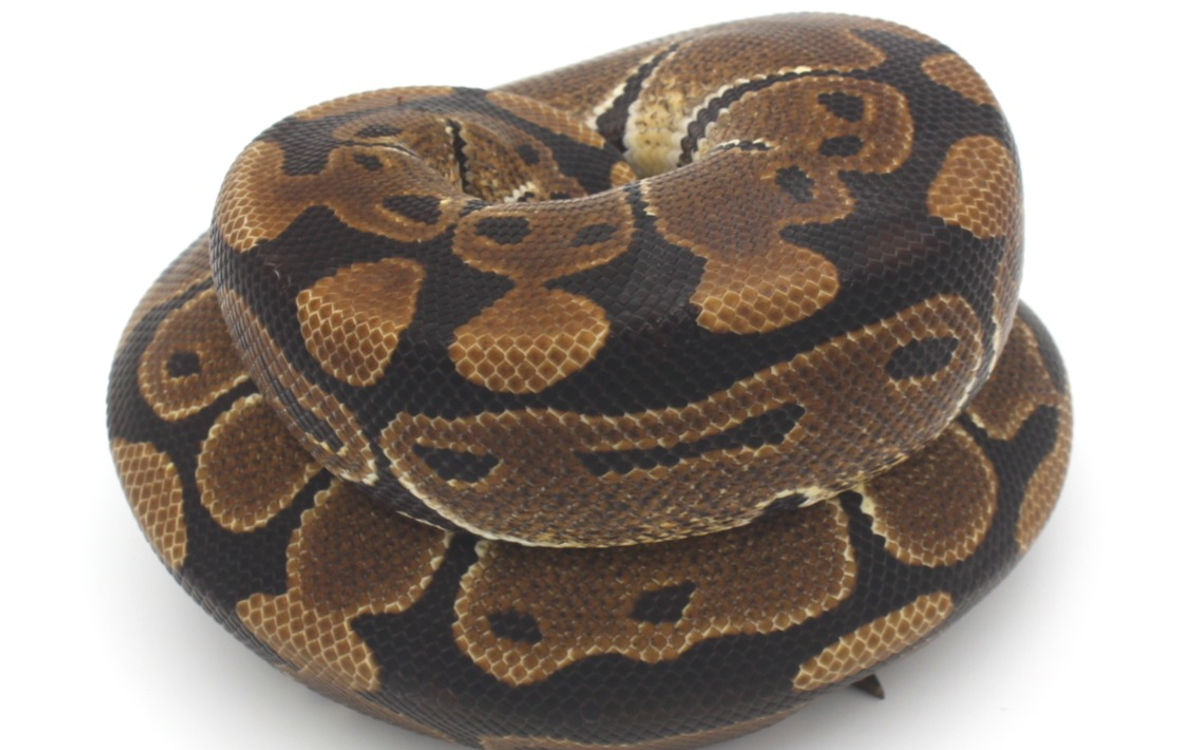
Snakes
Ball Python
Scientific Name: Python regius Why the Name: “Ball” python because they curl tightly into a ball when stressed or scared.
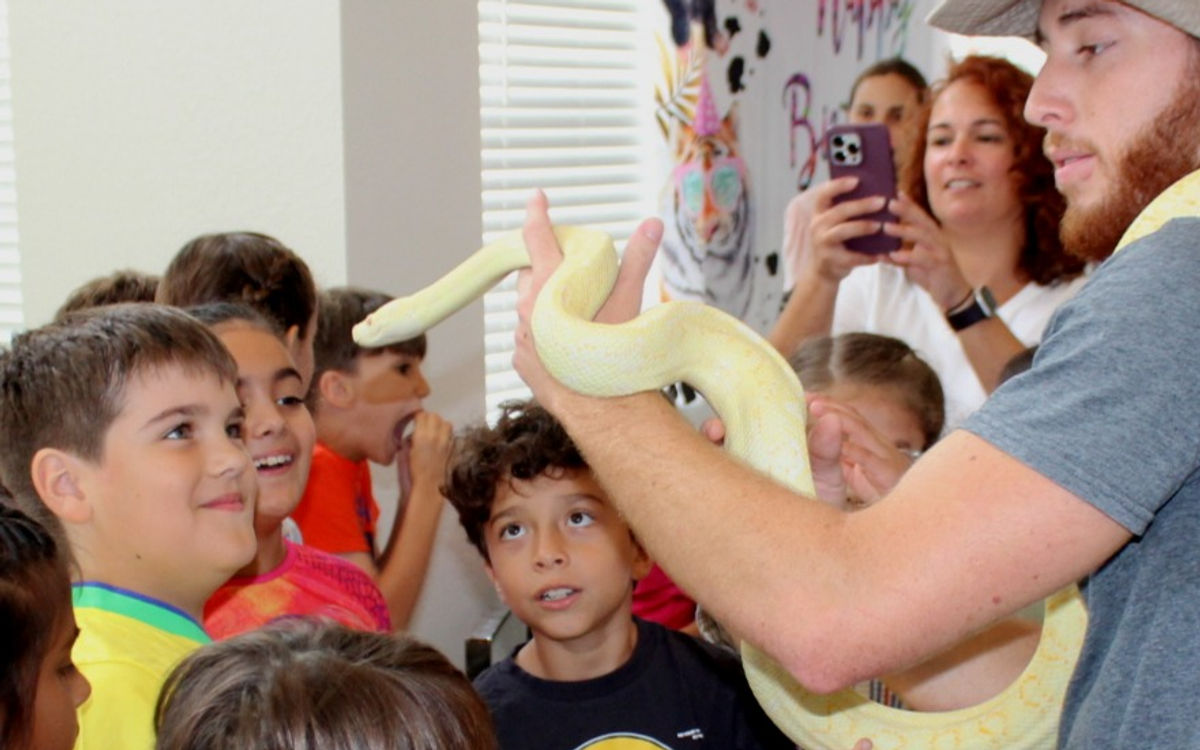
Snakes
Darwin Carpet Python
“Carpet” refers to their intricate, patterned scales that resemble an ornate carpet.
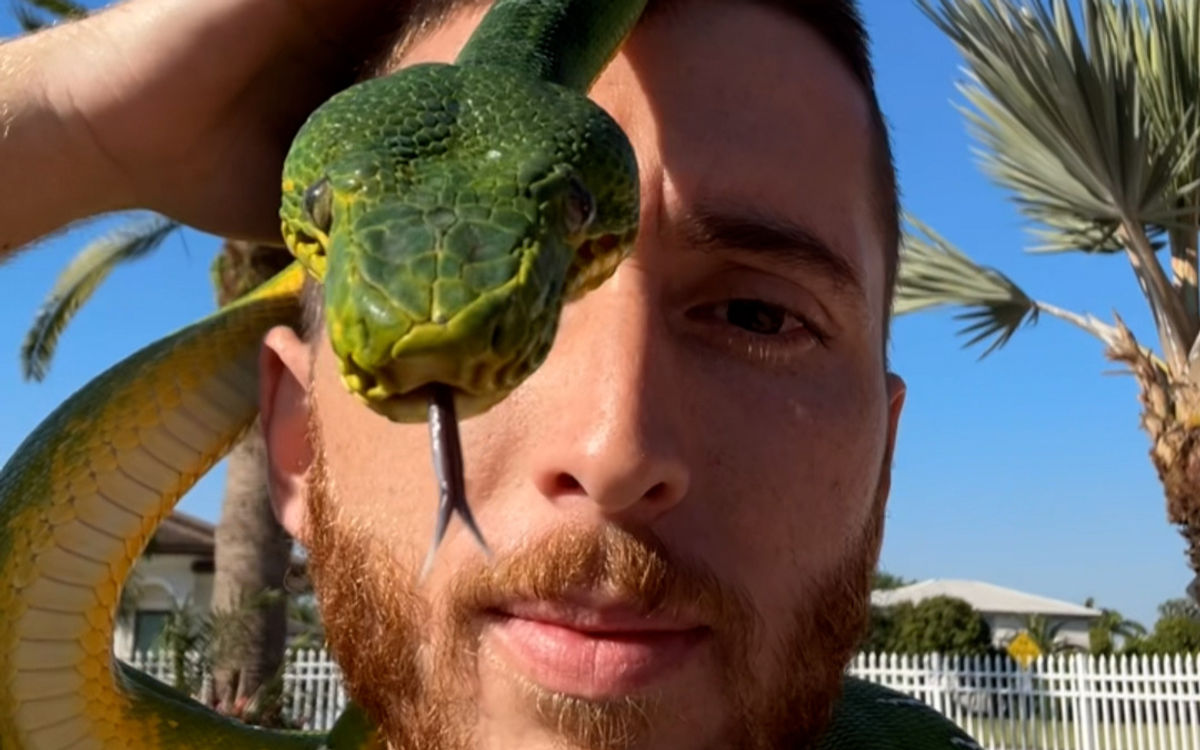
Snakes
Emerald Tree Boa
Scientific Name: Corallus caninus The emerald tree boa gets its name from its bright emerald-green coloration and striking white lightning-bolt pattern.
Want to Meet One?
Book an encounter and see this animal in person, or ask us anything about its care.
Book an Encounter