← Back to Quick Guides
Why it gets its name
Named after the Darwin region of Australia (Northern Territory) where this subspecies is most commonly found. “Carpet” refers to their intricate, patterned scales that resemble an ornate carpet.
Size and lifespan
Native habitat / where found
Behaviors
A young carpet python can start in a 4x2x2 enclosure, but adults require minimum 6x3x3 with strong vertical and horizontal climbing opportunities. Use cypress mulch or a mulch/soil blend to hold humidity safely. Provide a basking spot of 88–92°F, a cool side of 75–80°F, and ambient 82–85°F. Humidity should remain 50–60% with an occasional bump higher during shed cycles. UVB is optional but beneficial (low-level 2–5%).
Feeding Schedule
Food Options
Hydration
Provide a large water bowl sturdy enough for soaking. Change water daily or if soiled. Slight increases in humidity help hydration. No special vitamins usually required, but occasional calcium+D3 lightly dusted on chicks/quail can be used if offered. Overfeeding causes obesity, which is common in carpet pythons.
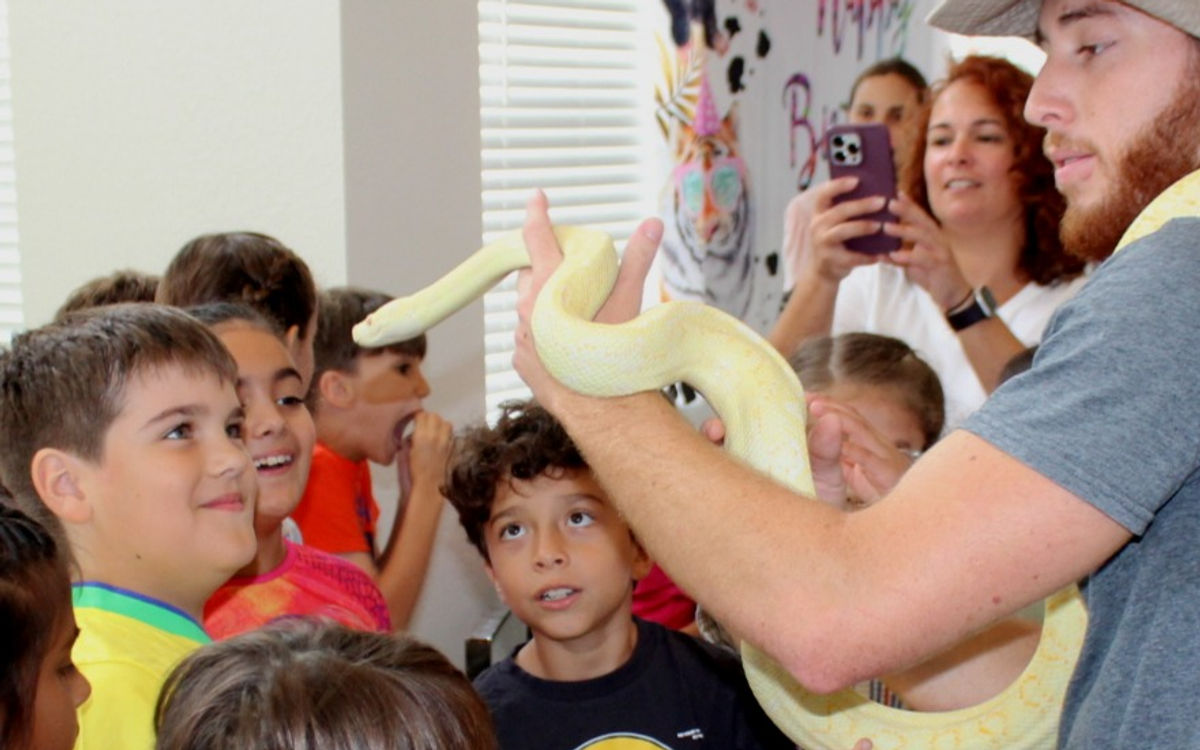
Carpet pythons handle well when captive-bred. They become more confident with calm, consistent handling. Too much handling immediately after eating or during shed causes stress. Handle by supporting the entire body and allowing the snake to move through your hands—never restrain the head.
Show Animal? Yes—when fully grown and well-socialized, they make excellent show snakes: impressive size, gentle demeanor, and visually striking. Ensure the individual is calm, not flighty, and accustomed to frequent handling.
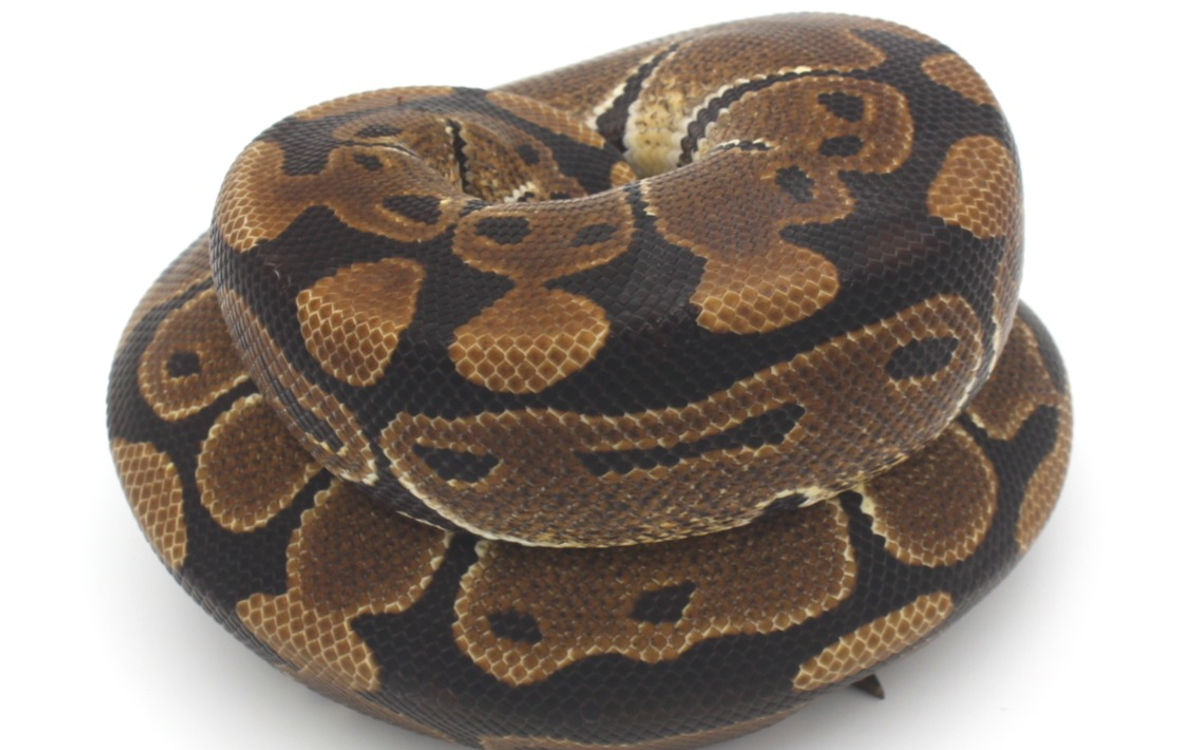
Scientific Name: Python regius Why the Name: “Ball” python because they curl tightly into a ball when stressed or scared.
 Boa Constrictor
Scientific Name: Boa constrictor constrictor / Boa imperator Species Name & Origin: Called the “boa constrictor” because of its method of subduing prey by constriction.
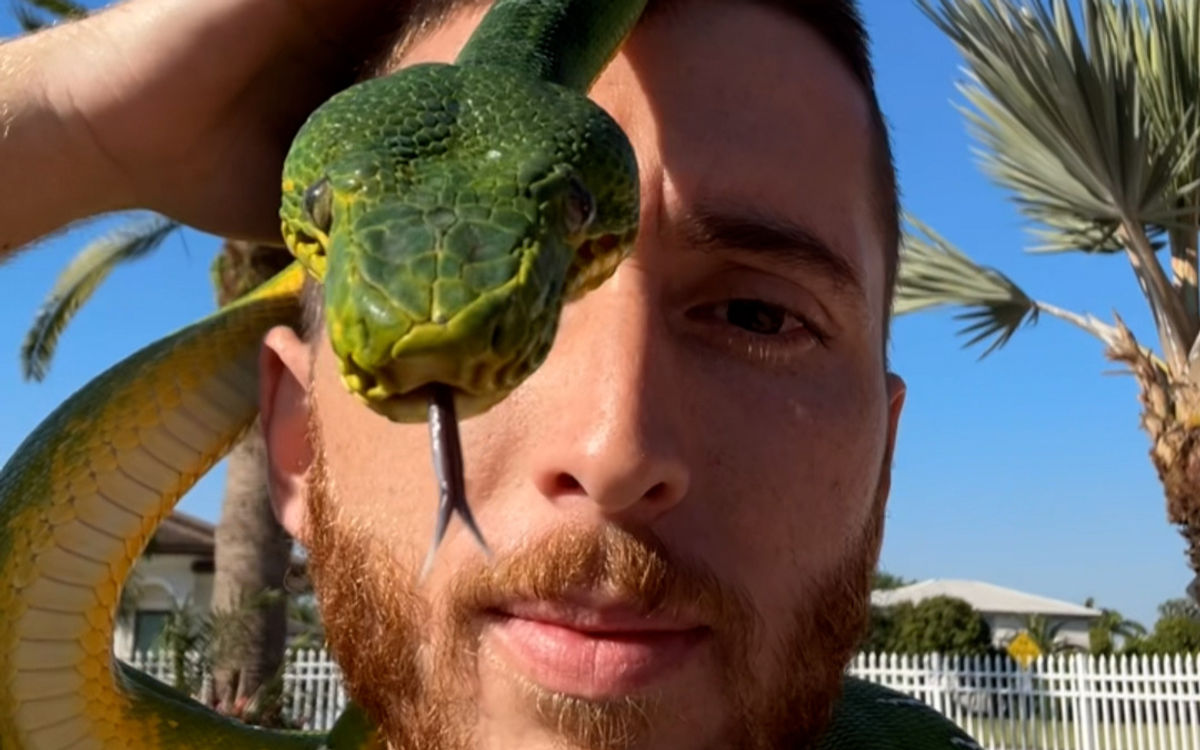
Scientific Name: Corallus caninus The emerald tree boa gets its name from its bright emerald-green coloration and striking white lightning-bolt pattern.
Book an encounter and see this animal in person, or ask us anything about its care.
Book an Encounter