- Scientific Name
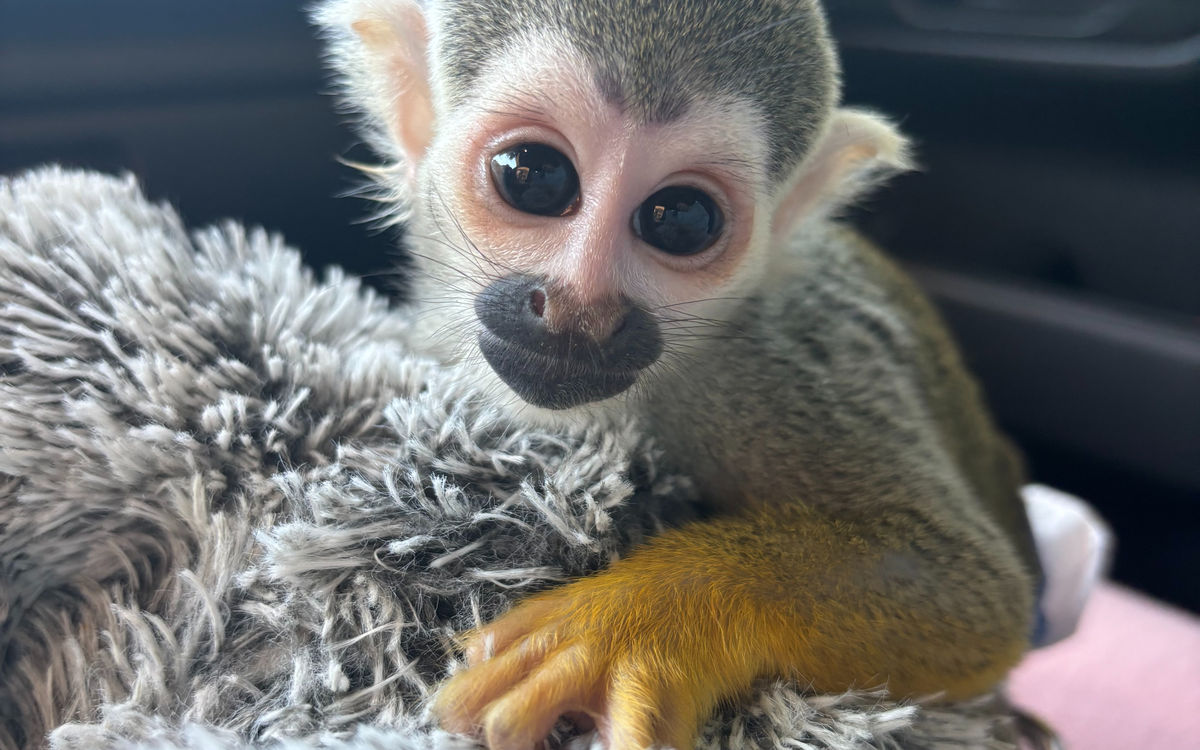
- Saimiri sciureus (Common Squirrel Monkey)
- Name Meaning
- Called “squirrel” monkey because they move like squirrels—fast, agile, and always climbing branches.
- Size & Lifespan
- 1.7–2.4 lbs; 9–14 inches plus a 14–17 inch tail. Lifespan 20–25 years in human care.
- Native Habitat
- Central & South America (tropical rainforests, river edges, flooded forests).
- Behavior
- Extremely intelligent, hyperactive, fast-moving, curious, vocal, socially complex, high-energy.
- Social or Solitary
- Very social—large groups of 20–50+ in the wild.
- Activity Cycle
- Diurnal (active during the day).
- Appearance
- Slim body, long tail used for balance, large expressive eyes for depth perception, and yellow/orange limbs for camouflage in forest light.
Fun Facts
- One of the most intelligent primates relative to body size.
- Uses urine-washing to mark territory and communicate.
- Tail is not prehensile—only for balance.
Enclosure
A large, vertical, enriched enclosure is essential. Minimum for one or a pair: 8 ft x 8 ft x 10 ft, bigger is always better. Provide multiple climbing branches, ropes, platforms, tunnels, and rotation enrichment.
- Substrate
- Cypress mulch, soil mix, or rubberized flooring—safe and easy to clean.
Temps & Humidity
- Day temp
- 78–88°F
- Night temp
- 72–78°F
- Humidity
- 60–80%
- Heat sources must be protected from touching.
- UVB
- Strongly recommended—improves bone health and vitamin absorption.
- Ideal Range
- Comfortable 75–90°F.
- Cold Tolerance
- Should NOT be kept below 60°F—risk of illness.
- Heat Tolerance
- Up to 95°F with shade and airflow.
Diet and Hydration
Squirrel monkeys need high-variety omnivore/frugivore diet.
WEEKLY FEEDING SCHEDULE (For adult 2 lb monkey):
- Daily AM
- Missouri Leaf-Eater biscuits or Monkey Biscuits soaked (¼–½ cup)
- Daily PM
- Mixed fruit/veg variety (½ cup)
- 3–4x/week: Insects (mealworms, crickets, superworms; 5–10 pieces)
- 2–3x/week: Protein boosters (egg, cooked chicken bites)
- Daily
- Browse/leafy greens
FOOD LIST
- Staples
- Monkey biscuits, vegetables, leafy greens, insects, berries, squash, papaya, apple (limited).
- Treats
- Grapes, banana, sweet potato, boiled egg, small nuts.
- No Feed/Toxic
- Chocolate, caffeine, onion, garlic, avocado, alcohol, uncooked beans, anything high-salt/sugar.
- Hydration
- Fresh clean water available at all times—use non-spill bowls or bottle systems. Hydrate fruits help too.
Supplements
- Calcium 2–3x/week
- Multivitamin for primates 2–3x/week
- Vitamin D if limited UVB exposure
- Behavior Notes
- Squirrel monkeys may steal food, toss bowls, or guard favorite treats—use multiple feeding stations.
Health
Common issues
- Parasites (Giardia, nematodes)
- Respiratory infections
- Metabolic bone disease (without UVB & calcium)
- Poxvirus, herpes B (from macaques), and bacterial infections
- Stress-related injuries or self-trauma
Proper hygiene, quarantine, and vet checkups are essential.
Handling
- Temperament
- Very fast, nervous, and high-energy. They rarely stay still. They bond with main caretakers but are wary of strangers.
Stress Risks
- Overhandling
- Loud environments
- Being restrained
- Being grabbed suddenly
How to Handle
- Allow them to climb onto you voluntarily—never grab.
- Use treats to guide.
- Keep two hands ready at all times—jumps are unpredictable.
- Avoid tail handling (for balance only).
- Best handled by trained staff only.
Suitability for Shows
NOT recommended as a show-around animal.
They are too fast, unpredictable, can bite when scared, are messy, and urinate frequently to mark.
Requirements for Show Animals
- Super friendly with anyone
- ❌ (bonded only to main handlers)
- Not messy
- ❌ (constant urine marking)
- Can be boxed for a day
- ❌ (high stress)
- Good with heat
- ✔️ but still not a match
- Conclusion
- Squirrel monkeys are NOT suitable for mobile shows with children.